

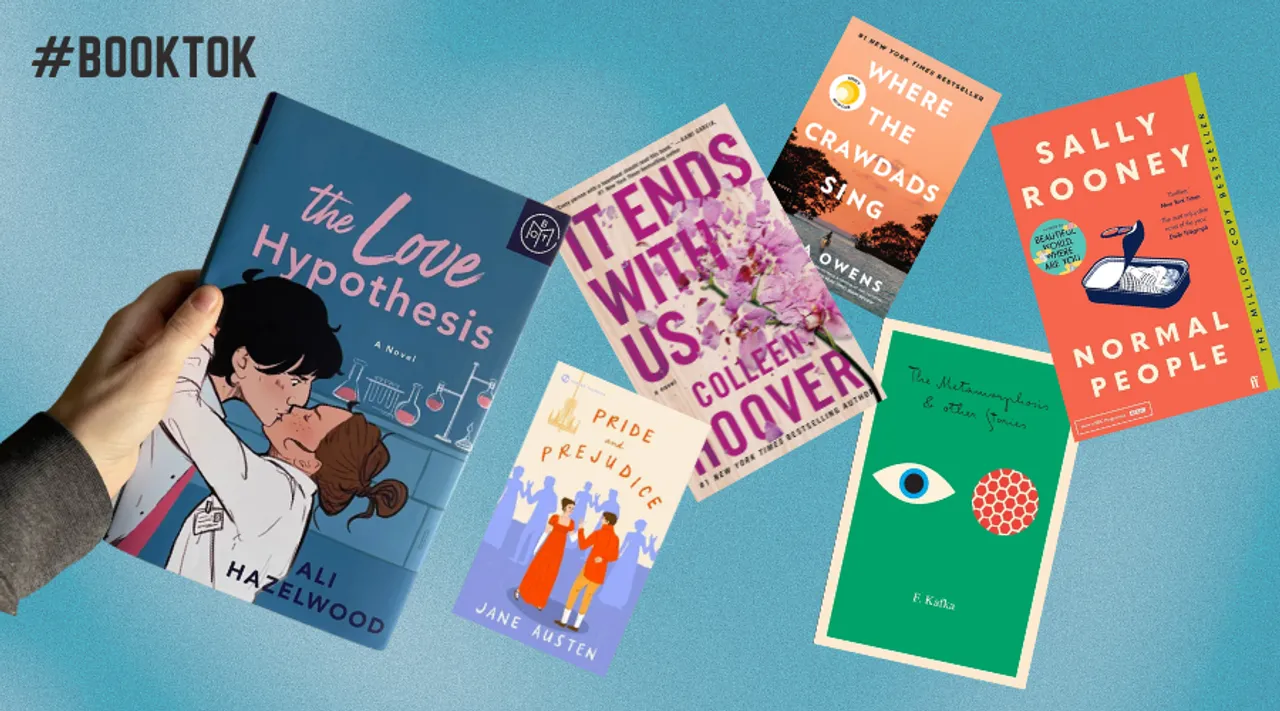
The BookTok phenomenon has fundamentally democratized publishing’s gatekeeping mechanisms, enabling self-published and indie authors to achieve bestseller status, multi-million-copy sales, and seven-figure incomes without traditional publisher intermediation. The most successful indie BookTok stories reveal patterns distinct from traditionally published success: longer initial growth timelines before viral moments, higher profit retention, and community-driven rather than algorithm-driven distribution. These authors demonstrate that BookTok’s democratic discovery mechanisms genuinely reward authentic voices and engaging narratives regardless of publishing path—a paradigm shift with profound implications for the future of literature.
The Foundational Success: Colleen Hoover’s Indie Origins
Colleen Hoover’s trajectory represents the template for indie-to-mainstream BookTok success, though her path preceded the platform’s explosive growth. Hoover self-published her debut Slammed in 2012 to her stepfather’s trailer, earning $55,000 in royalties within seven months—sufficient to repay his financial support and fund continued writing.
Her early success stemmed from organic reader enthusiasm, particularly among younger audiences who discovered her emotionally intense, character-driven narratives addressing contemporary relationship issues and trauma. Rather than pursuing traditional publishing deals immediately, Hoover continued self-publishing while building a devoted reader base through direct fan relationships and word-of-mouth momentum.
The critical inflection point occurred when It Ends with Us (originally published 2016) went viral on BookTok in late 2020, transforming Hoover’s backlist into a publishing phenomenon. Her relatively unknown domestic violence narrative suddenly achieved 770,000+ copies sold in a single year (2021), ultimately reaching 4+ million copies by 2022.
By 2022, Hoover had become the bestselling author of the year, with 14.3 million copies sold—a feat achieved entirely through BookTok’s organic community discovery rather than publisher marketing campaigns. Her subsequent publisher relationships have been negotiated from a position of extraordinary leverage, as publishers competed to distribute her already-proven bestselling works.
Hoover’s success model demonstrates that indie authors’ relationship with traditional publishing can evolve dramatically once platform traction validates commercial viability. Her independent origins created authenticity and financial leverage that shaped advantageous publishing deals in retrospect.
The Modern Template: Olivie Blake’s The Atlas Six
Olivie Blake’s The Atlas Six represents the quintessential modern indie-to-viral BookTok narrative, self-published in January 2020 and exploding into cultural phenomenon through organic platform discovery approximately 18 months later.
Blake self-published The Atlas Six through Amazon KDP with minimal expectations, viewing it as a creative experiment exploring dark academia themes and ensemble cast dynamics. The dark academia fantasy featuring six morally complex magicians competing for admission into a secret society generated modest indie sales initially—the type of backlist title that would languish in Amazon’s recommendation algorithms indefinitely in traditional publishing contexts.
The BookTok inflection point occurred mid-2021 when readers discovered the novel and began creating aesthetic videos, character analysis content, and emotional response videos around its themes and character dynamics. Within months, The Atlas Six had accumulated 11+ million TikTok mentions and dominated BookTok discussion, generating unprecedented organic visibility.
This grassroots momentum caught traditional publishing attention. In 2021, Tor Books initiated a seven-way auction competing for rights to Blake’s indie success, ultimately acquiring the trilogy for a significant advance. The Tor-published revised edition debuted at #3 on the New York Times bestseller list in March 2022, followed by Amazon Studios acquiring television adaptation rights—demonstrating how indie BookTok success attracts downstream media options.
Blake’s achievement is extraordinary precisely because it followed traditional indie publishing trajectory—no publisher marketing, no advance book tours, no professional promotion budget—yet achieved bestseller status through authentic community discovery. Her experience validated what industry observers increasingly recognized: traditional publishing’s gatekeeping mechanisms weren’t identifying reader demand, they were suppressing it.
The practical implication: Blake’s indie success negotiated her into a position of unprecedented leverage with traditional publishers, accessing professional publishing infrastructure (editing, distribution, subsidiary rights) while retaining creative control and elevated royalty percentages impossible for debuts.
Contemporary Indie Success Stories: The Six-Figure Income Cohort
A cohort of successful indie authors has documented achieving six-figure and seven-figure annual incomes through self-publishing on Amazon KDP and other platforms, with BookTok playing an increasingly central role in driving visibility and sales.
Kiersten Modglin (psychological thrillers/suspense): Self-published debut The Truth About Ruby Valentine in 2018 after traditional publisher rejection. Her breakout came with The Missing, which captivated readers through plot-driven narrative and unexpected twists. By consistently publishing 4–6 books annually and maintaining direct reader relationships through email and social media engagement, Modglin built a dedicated fanbase (“The Mod Squad”) that now generates 500,000+ total copies sold across her backlist and 100,000+ annual income.
BookTok amplified her visibility significantly beginning 2023–2024, with readers creating “thriller reactions” and twist-ending discussions that drove sustained visibility for her catalog. Her success demonstrates that indie authors pursuing high-volume publishing (4–6 titles annually) can achieve sustainable six-figure income through consistent reader relationships even without blockbuster viral moments.
Cecilia Mecca (historical romance): Self-published debut The Thief’s Countess in 2017, achieving six-figure income within one year—2018. Mecca attributes her rapid success to identifying an underserved niche (Scottish Borders historical romance), leveraging Facebook advertising to reach ideal reader demographics, and maintaining a consistent release schedule (25+ novels published since 2016).
While Mecca predates BookTok’s explosive growth, her historical romance series has gained significant visibility on the platform, where BookTok readers seeking romantasy and dark academia content frequently discover her deeper historical narratives. Her success demonstrates the indie publishing model’s scalability: disciplined genre targeting, consistent publication, direct reader marketing, and community engagement generate sustainable multi-six-figure income independent of viral moments.
Elana Johnson (Young Adult/Science Fiction): Transitioned from traditional publishing to indie publishing in 2018, subsequently publishing 100+ books across multiple genres. Johnson maintains consistent six-figure annual income through high-volume publishing (10+ titles per year), audience segmentation by genre, and diversified revenue streams including Amazon KDP, audio versions, and direct-to-reader sales.
Her prolific output strategy contrasts with viral-moment dependency—Johnson has built sustained success through sheer publishing volume, reader relationship depth, and algorithmic optimization of Amazon KDP categories and keywords rather than BookTok virality.
Lucy Score (Contemporary Romance): While initially published traditionally, Score transitions to self-publishing in segments while maintaining strong BookTok presence. Her books dominate BookTok discussions around contemporary romance and have been called “the Queen of Kindle” recognition for exceptional ebook sales. With 7+ million copies sold and 18+ #1 bestseller rankings, Score represents indie authors successfully negotiating traditional publisher relationships from positions of market power.
Why BookTok Disproportionately Benefits Indie Authors
BookTok’s algorithmic discovery mechanisms uniquely advantage indie authors compared to traditional publishing in several critical dimensions:
Algorithmic Equality: TikTok’s algorithm treats indie-published and traditionally-published content identically during initial distribution phases. An indie author’s video competes on algorithmic merit (hook quality, completion rate, engagement) rather than publisher marketing budget or industry relationships.
This represents a fundamental departure from traditional media gatekeeping, where publisher relationships, advance marketing budgets, and established distribution channels provided systematic advantages to established imprints. On BookTok, a self-published author’s authentic emotional response to their own book can outperform a big-five publisher’s professionally produced marketing content if viewers find the indie version more authentic.
Backlist Viability: Indie authors benefit enormously from backlist longevity. An indie-published title from 2018 carries no stigma or inventory pressure on the indie author—it simply remains available for discovery indefinitely. When BookTok surfaces that 2018 indie title, the author captures 35–70% royalties with zero incremental production costs, compared to traditional publishers who expect backlist titles to generate sustainable sales or get remainder-binned.
Direct Reader Relationships: Indie authors maintain direct email contact with readers through lead magnets and signup mechanisms, creating sustainable direct relationships independent of algorithm changes. While BookTok provides visibility spikes, email provides sustained customer acquisition.
Royalty Economics: Indie authors retain 35–70% of revenue compared to traditionally published authors earning 15–25%, fundamentally changing profitability calculations. An indie author achieving 10,000 monthly sales at $2.99 per book (65% KDP royalty) generates approximately $19,435 monthly income ($233,220 annually). A traditionally published author requires 40,000+ monthly sales to match that income—four times larger audience to achieve identical revenue.
This royalty advantage enables indie authors to invest more aggressively in BookTok promotion, advertising, and community building without reaching profitability thresholds that would constrain traditionally-published authors.
BookTok Indie Success Patterns: The Distinct Trajectories
Successful indie BookTok authors demonstrate identifiable patterns diverging from traditional publishing models:
Genre Specialization: Top indie authors specialize ruthlessly in high-demand genres with passionate, engaged communities—romance, psychological thrillers, dark academia, paranormal romance, LitRPG. Rather than attempting broad appeal, successful indie authors identify underserved niches within passionate communities and become the definitive voice for that niche.
High-Volume Publishing: Sustained indie income requires consistent publication of 4–8+ titles annually. This keeps authors visible in algorithm recommendations, provides multiple entry points for new readers, and generates compounding backlist revenue. Volume strategy differs radically from traditional publishing, which treats each release as a discrete business cycle.
Direct Reader Marketing: Successful indie authors employ email lists, Facebook ads targeting specific demographics, Goodreads advertising, and Amazon advertising to reach readers directly rather than relying on organic platform distribution alone.
Community Engagement Obsession: Top indie authors respond to every comment, create reader-focused content, foster reader communities (Discord servers, Facebook groups, email newsletters), and treat their audience as active collaborators rather than passive consumers.
The BookTok Advantage for Indie Authors: Quantified
Research quantifies BookTok’s specific advantage for indie publishing:
- Books trending on BookTok experience 300–500% sales increases on average
- Indie BookTok books retain 35–70% of revenue vs. 15–25% for traditional
- Micro-influencers (1K–10K followers) generate 18% BookTok engagement vs. 4% Instagram
- Self-published authors report generating five-figure monthly incomes from single viral titles
- BookTok-driven indie book sales in 2024 reached approximately 59 million print units attributed directly to platform visibility
These metrics demonstrate that indie authors can achieve traditional publishing-level revenue with substantially lower commercial risk and higher profit retention through strategic BookTok engagement.
The Downside: Sustainability Without Virality
The critical limitation of indie BookTok success involves sustainability independent of viral moments. While Blake and Hoover achieved extraordinary success, countless indie authors publish through KDP never achieving meaningful BookTok visibility, languishing in algorithmic obscurity generating minimal sales.
The pattern suggests that BookTok visibility remains unpredictable despite algorithmic sophistication—high-quality indie books don’t automatically achieve platform prominence simply through optimized hooks or genre alignment. Some element of genuine community enthusiasm, timing, serendipity, or unexplainable algorithmic preference determines which indie titles surface into visibility.
Additionally, indie authors sustaining six-figure income typically employ aggressive publishing schedules (6–8+ books annually), requiring professional-grade production capabilities, editing budgets, cover design investment, and marketing spend that exceed many aspiring indie authors’ resources.
Conclusion: The Indie Publishing Inflection Point
BookTok represents an inflection point where indie and self-published authors have achieved parity with traditional publishing in terms of discoverability, bestseller achievement, and income potential. The algorithmic discovery mechanisms have stripped away traditional gatekeeping advantages, enabling authentic voices and engaging narratives to reach massive audiences regardless of publishing path.
For indie authors, BookTok offers unprecedented advantages: algorithmic fairness, backlist longevity, direct reader relationships, and superior profit retention. Authors like Olivie Blake, Kiersten Modglin, and Lucy Score demonstrate that substantial income, cultural relevance, and traditional publishing partnerships remain achievable through self-publishing combined with strategic BookTok engagement.
Yet this democratization comes with caveats: indie success requires genuine quality, ruthless genre specialization, consistent high-volume publishing, aggressive community engagement, and often substantial out-of-pocket marketing investment. BookTok visibility remains partially unpredictable despite algorithmic sophistication, meaning indie authors must combine platform optimization with authentic storytelling to achieve sustainable success.
The most significant implication: the future of publishing increasingly involves authors negotiating the indie-versus-traditional decision based on current market position and strategic preferences rather than gatekeeping constraints. BookTok has made that choice genuinely open.