
BookTok’s genre hierarchy reveals a distinct psychological and narrative architecture underlying viral success. Rather than reflecting publishing’s traditional sales distribution, BookTok readers gravitate toward genres that deliver specific emotional and escapist rewards through carefully engineered tropes, morally complex characters, and high-stakes romantic or adversarial tension. Understanding why these genres dominate—and why others languish despite broader market viability—provides insight into how digital communities shape literary culture and what narratives resonate most powerfully with millennial and Gen Z readers.
The Romantasy Phenomenon: Redefining Fantasy Through Romance
Romantasy—a hybrid genre blending fantasy worldbuilding with contemporary romance intensity—has emerged as BookTok’s undisputed heavyweight, commanding 28% of community engagement and generating some of the platform’s most viral content.
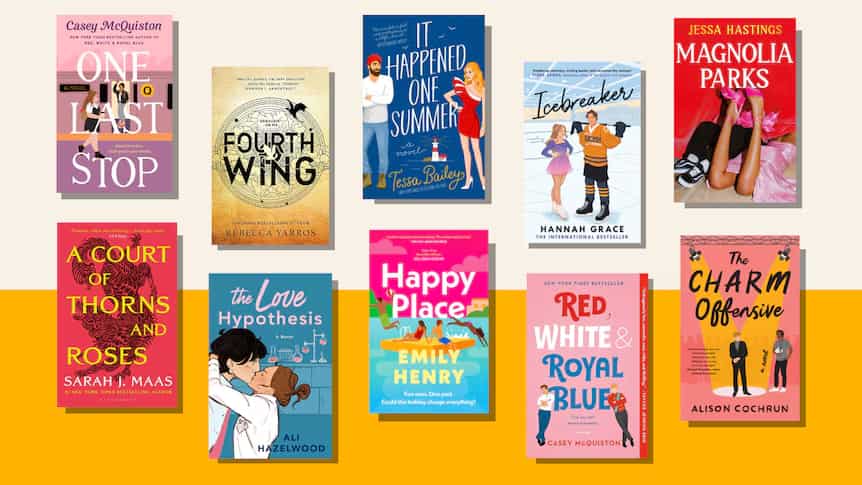
Romantasy succeeds because it delivers a carefully balanced reward structure. The fantasy elements provide elaborate worldbuilding with magic systems, fae courts, dragons, and existential stakes that justify intense emotional investment. The romance elements ensure emotional intensity, character intimacy, and the relationship dynamics that BookTok audiences crave. Rebecca Yarros’s Fourth Wing, arguably the defining romantasy of the 2020s, exemplifies this formula: a richly detailed dragon-rider academy setting with complex political intrigue, combined with a slow-burn enemies-to-lovers romance featuring morally gray male characters and a disabled female protagonist.
Critically, romantasy audiences expect “spicy” (sexually explicit) content at higher heat levels than traditional romance. This expectation reflects broader shifts in what BookTok communities consider acceptable or desirable: older publishing norms around fade-to-black sexual content are being replaced by reader demand for explicit, detailed intimate scenes. Publishers, initially shocked by this demand, have rapidly adapted their acquisition strategies, with major houses now actively pursuing romantasy titles previously rejected as “too niche.”
The psychological appeal of romantasy operates on multiple levels. The fantasy setting provides escapism—readers can temporarily inhabit worlds with different power structures, magical abilities, and supernatural stakes. The romance provides emotional resonance and relatability—even in magical courts, relationship dynamics (jealousy, vulnerability, trust, passion) mirror universal human experiences. The combination of these elements creates what readers describe as “obsession-inducing” narratives: the story becomes impossible to abandon because emotional and plot-driven stakes are simultaneously extreme.
Dark Romance: Celebrating Morally Gray Desire
Dark romance (18% of BookTok engagement) represents the genre that most visibly divides readers, critics, and parents concerned about what content younger audiences consume. Yet within BookTok communities, dark romance has become not merely acceptable but celebrated—a genre where readers proudly display their “dangerous book boyfriends” and openly discuss attractions to possessive, morally ambiguous, sometimes abusive male characters.
Dark romance succeeds by inverting traditional love narratives. Rather than hero-rescues-damsel formulas, dark romance positions the female protagonist as the prize—someone so extraordinary that dangerous, powerful men fundamentally reshape their moral codes for her. Readers describe the appeal with unfiltered language: they want “men who could level kingdoms” but choose instead to “drop to their knees” for the female protagonist. This psychological inversion transforms traditional power dynamics, making female desirability the ultimate power currency.
The genre’s recent explosive growth reflects a deliberate shift in how readers view romantic agency. BookTok has essentially democratized darker fantasies previously considered shameful—a reader seeking emotionally intense narratives featuring morally gray characters no longer faces judgment but community celebration. Publishers who received 30+ rejection letters for dark romantasy manuscripts just five years ago now watch those same concepts reach bestseller status as BookTok demand reshapes acquisition strategies.
However, this success comes with documented concerns. Dark romance books frequently romanticize controlling behavior, emotional manipulation, possessiveness, and sometimes physical abuse. Critics argue that presenting these dynamics as indicators of intense love rather than warning signs—particularly to teenage readers—normalizes unhealthy relationship expectations and confuses intensity with passion. The lack of content warnings on many published editions exacerbates this concern, leaving vulnerable readers without explicit guidance on potentially triggering material.
The psychological appeal combines fantasy escapism with a specific form of wish fulfillment: the fantasy that being chosen by a dangerous, powerful person confirms your extraordinary value. This appeals particularly to readers who have experienced marginalization or powerlessness, as the narrative offers symbolic redemption through male obsession.
Contemporary Romance: Grounded Relatability Within Emotional Intensity
Contemporary romance (16% of BookTok engagement) differs fundamentally from its fantasy-adjacent cousins by remaining grounded in present-day reality—no magic systems, no supernatural stakes, just emotionally complex relationships navigating modern life.
Contemporary romance thrives on recognizable tropes that BookTok audiences actively seek out and reference by name: “enemies-to-lovers,” “fake dating,” “second-chance romance,” “forced proximity,” “grumpy-sunshine.” Readers explicitly search for books with these tropes, using them as discovery filters rather than viewing them as limitations or formulaic predictability. This represents a fundamental shift from traditional literary criticism, where relying on recognizable patterns was considered lazy writing. BookTok readers instead view tropes as narrative shortcuts that efficiently communicate the emotional journey they’re seeking.
The appeal of contemporary romance operates on relatability: readers see their own lives, challenges, and relationship dynamics reflected in narratives without requiring suspension of disbelief about magical systems or supernatural elements. Books like Ali Hazelwood’s The Love Hypothesis—a contemporary workplace romance featuring the “fake dating” and “slow burn” tropes—succeed precisely because the obstacles, emotional vulnerabilities, and relationship beats feel achievable and realistic.
Contemporary romance also provides consistent emotional resolution. Readers know they’re entering a narrative with a guaranteed happy ending (HEA) or guaranteed happy-for-now ending (HFN)—a certainty that thriller or literary fiction cannot provide. In an era of constant uncertainty and crisis news, the promise of romantic resolution offers psychological reassurance and escapism through emotional satisfaction.
Fantasy: Worldbuilding as Primary Appeal
Fantasy literature (15% of BookTok engagement), distinct from romantasy through its prioritization of worldbuilding over romance, remains remarkably consistent in popularity while adapting to changing reader preferences.
BookTok fantasy readers increasingly demand complex magic systems with internally consistent rules, rich history and mythology, and detailed cultural worldbuilding. Generic medieval fantasy with minimal worldbuilding explanation underperforms compared to series that invest substantial narrative complexity into explaining how magic works and why the magical world developed its particular social structures.
The psychological appeal of fantasy combines escapism—access to genuinely different realities—with intellectual engagement. Readers enjoy the puzzle-solving aspects of understanding a novel magic system as much as they enjoy the emotional dimensions of characters navigating that system. This suggests that BookTok audiences are not monolithic consumers seeking only emotional intensity, but rather readers with layered interests spanning both emotional and intellectual dimensions.
Recent data shows fantasy was the top genre for male readers and readers aged 18–34, suggesting that BookTok’s stereotype as exclusively female-focused obscures genuine genre diversity within the community. Fantasy, science fiction, and thriller readers form engaged subcommunities on the platform alongside romance readers, though romance content generates higher visibility and engagement metrics.
Dark Academia: Intellectual Aesthetics and Moral Complexity
Dark academia (10% of BookTok engagement) has experienced remarkable revival driven partially by BookTok curation, though the genre predates the platform significantly. What BookTok amplified is the aesthetic and thematic appeal of dark academia to younger readers seeking intellectual narrative complexity alongside dark atmosphere.
Dark academia narratives center on elite educational settings (prestigious universities, magical academies, special training programs) populated by morally complex, often unethical characters. The genre’s appeal combines multiple layers:
Intellectual Escapism: Dark academia features characters engaged in genuine intellectual pursuits—reading, studying, philosophical debate—providing readers vicarious intellectual engagement alongside entertainment.
Aesthetic Atmosphere: Gothic settings, moody libraries, autumnal weather, secret societies, and dark aesthetics create immersive atmospheric reading experiences that readers find deeply comforting despite (or because of) their darkness.
Moral Ambiguity: Characters in dark academia navigate complex ethical situations without clear good-vs-evil binaries. Protagonists often bend their moral codes to fit into elite social groups, creating internal conflict that resonates with readers navigating their own value compromises.
Class and Social Commentary: Dark academia often explicitly addresses class disparities, privilege, exclusion, and systemic inequality, allowing readers to explore real-world social problems through fictional narrative.
The genre’s appeal skews toward intellectually-engaged readers and those experiencing or concerned about navigating elite social hierarchies. Books like Leigh Bardugo’s Ninth House and Donna Tartt’s The Secret History—both extensively discussed on BookTok—provide simultaneously escapist and socially conscious narratives that appeal to engaged, thoughtful readers.
Psychological Thrillers: Puzzle-Solving and Emotional Complexity
Psychological thrillers (8% of BookTok engagement) operate through distinct psychological mechanics compared to romance-forward genres. These narratives succeed by engaging readers’ puzzle-solving instincts while delivering emotional surprise and often disturbing revelations about human nature.
The psychological appeal of thrillers operates on several documented dimensions:
Curiosity About the Unknown: Humans possess inherent drive to solve mysteries and understand baffling situations. Thrillers tap into this drive by presenting puzzles that feel simultaneously solvable and genuinely puzzling, keeping readers actively engaged in hypothesis formation and revision.
Safe Danger: Thrillers allow readers to quasi-experience dangerous situations (murder, psychological manipulation, betrayal) from safe distance, providing adrenaline rushes without real consequences. This aligns with dark tourism, true crime podcast popularity, and other cultural phenomena where audiences crave excitement through consuming narratives about human darkness.
Active Participation: Effective thrillers make readers feel like active participants attempting to solve the mystery alongside characters, transforming passive reading into engaged puzzle-solving. Unreliable narrators particularly amplify this engagement, as readers must actively question what they’re being told and reconstruct truth from fragmented, distorted information.
Emotional Empathy: Psychological thrillers increasingly feature emotionally complex female protagonists, particularly in domestic suspense subgenre, appealing to readers (predominantly female) who seek empathetic character development alongside plot intensity. Women particularly gravitate toward thrillers that explore psychological manipulation and emotional complexity rather than pure action-driven plots.
BookTok psychological thrillers frequently feature unreliable female narrators, twist endings that recontextualize reader understanding, and explorations of trust and betrayal within intimate relationships—narrative elements that generate viral potential through audience discussion and debate about “what really happened.”
Cozy Fantasy: The Emerging Counter-Trend
Cozy fantasy (5% of BookTok engagement, but rapidly growing) represents the platform’s most interesting recent development: a deliberate counter-trend to dark romance and high-stakes fantasy.
Cozy fantasy (sometimes called “slice-of-life fantasy”) prioritizes comfort, warmth, and low-stakes storytelling over dramatic tension and mortal peril. These narratives often feature protagonists learning magic in peaceful settings, running magical shops or cafes, tending magical gardens, or simply existing in magical worlds without apocalyptic threats. Examples include cottagecore-aesthetic narratives featuring witches baking bread in enchanted cottages, dragons destroying furniture instead of kingdoms, and magical bookstores offering refuge to wounded souls.
The psychological appeal reflects a documented shift in reader priorities, particularly among readers exhausted by pandemic stress and constant crisis news. Cozy fantasy offers escapism without the emotional toll of high-stakes danger—readers can inhabit magical worlds providing comfort and security rather than adrenaline and terror. This genre particularly appeals to neurodivergent readers seeking fiction that doesn’t overwhelm their sensory or emotional systems with constant crisis.
The emergence of cozy fantasy demonstrates BookTok’s surprising capacity for genre innovation. What traditional publishing dismissed as “too niche” (comfort fantasy without dramatic conflict) has found enormous audience through platform visibility, suggesting that reader preferences diverge substantially from what conventional publishing gatekeepers predicted.
The Trope Architecture: Why Specific Narrative Patterns Drive Virality
Across most BookTok genres, success depends less on unique worldbuilding or plot originality than on strategic deployment of audience-beloved tropes. This represents a fundamental divergence from traditional literary criticism, where relying on recognized patterns signals formulaic writing, yet on BookTok, tropes are celebrated features rather than lazy shortcuts.
Enemies-to-Lovers stands as perhaps BookTok’s most iconic trope, appearing across romantasy, dark romance, dark academia, and contemporary romance. The psychological appeal operates on several levels: tension from conflict creates emotional intensity; forced proximity amplifies charged interaction; and character transformation (from animosity to love) provides narrative arc satisfaction. When executed well—where characters’ animosity has genuine basis and resolution involves character growth—enemies-to-lovers generates some of the most actively discussed BookTok content.
Fake Dating succeeds because it creates organic narrative reason for intimate proximity while maintaining plausible emotional distance that the plot can later overcome. Readers enjoy watching characters navigate emotional confusion as fake relationship parameters blur with genuine feeling.
Morally Gray/Anti-Hero Male Characters have become arguably the defining element of contemporary romantic BookTok. Rather than expecting male love interests to be unambiguously good, readers actively seek characters described as “dangerous,” “unhinged,” “ruthless,” or “villainous.” This shift challenges traditional romance conventions where male leads were expected to be essentially decent underneath any rough exterior. BookTok readers instead celebrate male characters who are genuinely morally compromised, viewing the female protagonist’s ability to love them despite (or because of) their darkness as evidence of her strength and extraordinary nature.
Why Some Genres Underperform: The BookTok Hierarchy and Market Gaps
Understanding which genres succeed on BookTok requires examining not only what performs well but what consistently underperforms despite broader market viability. Literary fiction, despite critical prestige, rarely generates viral BookTok content because it typically prioritizes prose style and thematic subtlety over emotional intensity and plot-driven engagement. Science fiction and crime fiction, though possessing robust reading communities, underperform romantasy not because readers dislike them but because algorithms and content creators prioritize the emotional intensity of romance-forward narratives.
This algorithmic bias creates a feedback loop: romance and romantasy content generates higher engagement, triggering algorithmic amplification that exposes more users to these categories, increasing relative popularity perception compared to other genres that receive less visibility. Publishers responding to BookTok metrics increasingly acquire romantasy and dark romance while deprioritizing genres with lower algorithmic performance, further distorting what appears available and popular relative to actual reader diversity.
The Seasonal Genre Cycle
BookTok genre popularity follows documented seasonal patterns reflecting reader psychology and consumption habits. Dark romance and psychological thrillers peak during autumn and winter months, aligning with comfort-seeking in darkness and cold months. Contemporary romance and cozy fantasy surge during spring and summer. Dark academia peaks during September coinciding with academic calendar, while paranormal romance trends during October around Halloween.
These patterns suggest that BookTok readers strategically match genre selection to seasonal mood and climate, viewing their reading as climate-responsive self-care rather than genre loyalty.
Conclusion: The Algorithmic Reshaping of Literary Taste
BookTok’s genre hierarchy represents neither reader diversity nor publishing’s traditional market distribution, but rather a specific algorithmic optimization for engagement metrics that privilege emotional intensity, escapism, and high-reread-value narratives. The genres dominating BookTok—romantasy, dark romance, dark academia—deliver maximum emotional satisfaction per page, feature tropes readers actively seek out by name, and generate organic discussion through their controversial or divisive elements.
What readers consume on BookTok increasingly shapes what publishers acquire, which in turn affects what new writers attempt, creating a self-reinforcing cycle that gradually narrows genre diversity in publishing while simultaneously creating new genre space (cozy fantasy, dark romantasy) for experimental work that traditional gatekeepers had rejected as insufficiently commercial.
The most profound implication: BookTok has exposed a massive disconnect between what traditional publishing assumed readers wanted and what readers actually desired once algorithmic curation removed traditional gatekeeping filters. Millions of readers discovered they craved darker romance, moral complexity, and explicit content long deemed “too risky” for mainstream publication. This democratization of literary preference simultaneously represents genuine reader empowerment and algorithmic channeling toward narratives optimized for engagement rather than literacy, intellectual complexity, or diversity.