

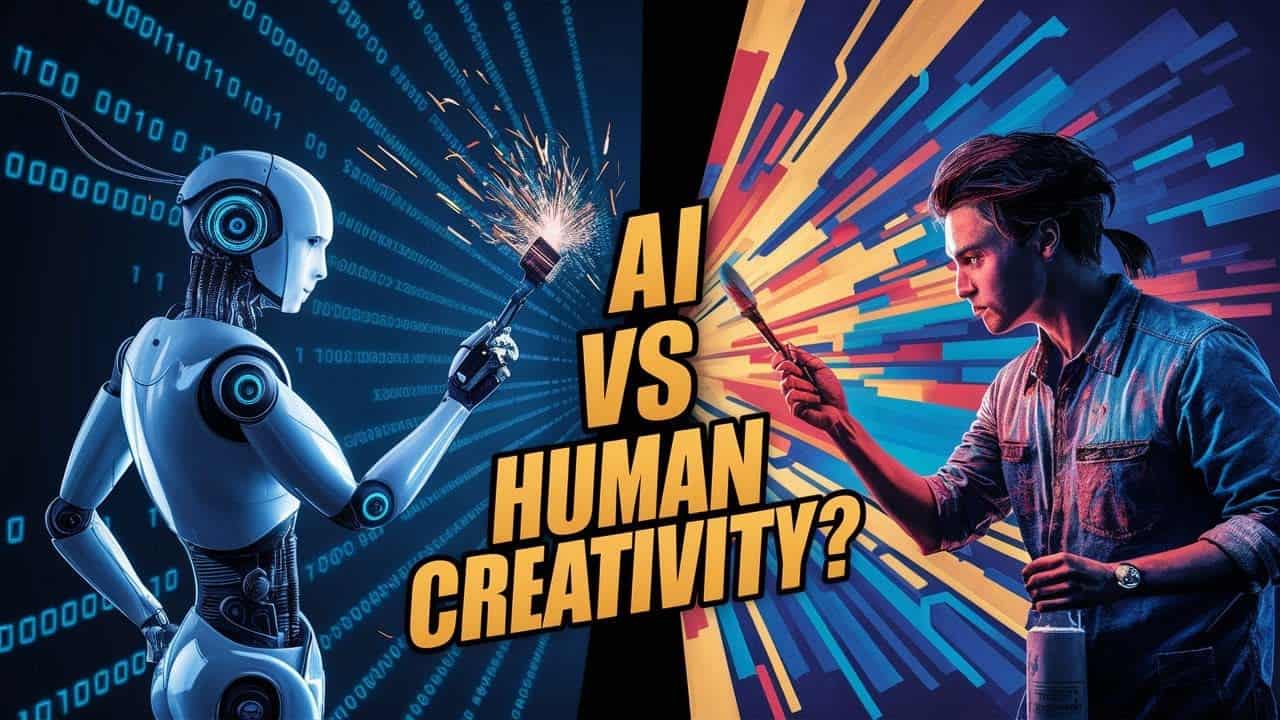
The debate is no longer about whether artificial intelligence can create content—it clearly can. The real question shaping digital media, marketing, and online business today is more nuanced: what do audiences actually prefer—human creativity or AI-generated content?
As generative AI tools become deeply embedded in content production workflows, businesses are publishing faster and at greater scale than ever before. Yet, alongside this surge in efficiency, a subtle but important shift is taking place. Audiences are becoming more selective, more aware, and more sensitive to the differences between content created by humans and content generated by machines.
Understanding these preferences is no longer optional. For brands, creators, and platforms, it is a strategic necessity.
The Content Explosion Era
The sheer volume of content produced in 2026 is unprecedented. AI tools can generate blog posts, videos, social media captions, product descriptions, and even full-scale marketing campaigns in seconds.
This has created a landscape defined by:
- Content abundance across every niche.
- Reduced production costs.
- Faster publishing cycles.
- Increased competition for attention.
However, abundance has led to a paradox. While users have more content than ever, their attention is more limited—and more valuable.
As a result, audiences are not just consuming content; they are filtering it aggressively.
What AI Content Does Well
AI-generated content has earned its place in the digital ecosystem for good reason. It excels in several key areas:
- Speed: Content can be produced instantly.
- Scalability: Businesses can create thousands of pieces simultaneously.
- Consistency: Tone, structure, and formatting can be standardized.
- Data integration: AI can synthesize large volumes of information quickly.
For example, an e-commerce company can generate hundreds of product descriptions in minutes, maintaining uniform quality and structure across its catalog.
For many use cases—especially informational or repetitive content—audiences are perfectly satisfied with AI-generated outputs, as long as they are accurate and clear.
Where AI Falls Short
Despite its strengths, AI content still has limitations that audiences increasingly notice:
- Lack of lived experience: AI cannot truly replicate personal insight.
- Predictable tone: Many AI-generated texts feel similar or formulaic.
- Limited originality: Outputs often remix existing ideas rather than introduce new ones.
- Weak emotional depth: Subtle humor, empathy, and storytelling can feel artificial.
In 2026, audiences are becoming more skilled at recognizing these patterns. Even when they cannot explicitly identify content as AI-generated, they often describe it as “generic,” “flat,” or “forgettable.”
This perception directly affects engagement.
The Enduring Power of Human Creativity
Human-created content continues to stand out in several critical ways:
- Storytelling: Humans excel at crafting narratives that resonate emotionally.
- Perspective: Unique viewpoints and opinions create differentiation.
- Cultural nuance: Humans understand context, humor, and social dynamics.
- Authenticity: Audiences perceive human effort as more genuine.
Consider a founder sharing a personal story about failure and recovery. The emotional weight, vulnerability, and specificity of that narrative create a connection that AI struggles to replicate convincingly.
This is where human creativity maintains a decisive edge.
What Audiences Actually Prefer
The key insight in 2026 is that audience preference is not binary. It is contextual.
Different types of content trigger different expectations:
1. Informational Content
For straightforward queries—such as “how to reset a router” or “currency exchange rates”—audiences prioritize speed and clarity. AI-generated content performs well here, and users generally do not care who created it.
2. Decision-Making Content
When evaluating products, services, or investments, audiences prefer content that includes human judgment, experience, and opinion. Reviews, comparisons, and case studies benefit significantly from human input.
3. Emotional or Inspirational Content
In areas like storytelling, personal development, and brand narratives, human creativity is strongly preferred. Audiences seek connection, not just information.
4. High-Stakes Content
In fields such as healthcare, finance, and legal advice, trust is critical. Users tend to prefer content that is clearly authored or reviewed by qualified humans.
In short, the more the content requires trust, emotion, or judgment, the more audiences lean toward human-created material.
The Rise of “Perceived Authenticity”
One of the most important concepts shaping content preferences in 2026 is perceived authenticity.
This refers not just to whether content is actually human-made, but whether it feels authentic to the audience.
Signals that enhance perceived authenticity include:
- Personal anecdotes and first-hand experiences.
- Clear author identity and credentials.
- Imperfections that suggest human involvement.
- Original insights or contrarian opinions.
Interestingly, even hybrid content (AI-assisted but human-edited) can achieve high authenticity if these elements are present.
This suggests that perception matters as much as reality.
Engagement Data Tells the Story
Emerging data across platforms highlights a consistent pattern:
- AI-generated content performs well in terms of impressions and reach.
- Human-created content performs better in engagement metrics such as time on page, shares, and comments.
- Conversion rates tend to be higher when human elements are present.
For example, a SaaS company might use AI to generate blog content for SEO, but rely on human-written case studies and founder insights to convert visitors into customers.
This division of roles reflects how audiences interact with different types of content.
The Hybrid Content Model
Rather than choosing between human creativity and AI, most successful organizations in 2026 are adopting a hybrid approach.
This model combines:
- AI efficiency for drafting, research, and scaling.
- Human creativity for refinement, storytelling, and strategic thinking.
In practice, this might look like:
- AI generating an initial article outline.
- A human writer adding insights, examples, and narrative flow.
- Editors ensuring quality, tone, and originality.
The result is content that is both efficient to produce and meaningful to consume.
Implications for Businesses and Creators
Understanding audience preferences has direct strategic implications:
1. Content Strategy Must Be Tiered
Not all content should be treated equally. High-impact content should involve significant human input, while lower-stakes content can be automated.
2. Personal Branding Is More Valuable Than Ever
Audiences increasingly connect with individuals rather than faceless brands. Highlighting human authorship can significantly enhance trust.
3. Quality Beats Quantity
Publishing more content is no longer a guaranteed advantage. Distinctiveness and authenticity are becoming more important than volume.
4. Transparency Builds Trust
Being open about how content is created—especially when AI is involved—can improve credibility rather than harm it.
A Practical Example
Imagine two blog posts on the same topic: “How to Start an E-commerce Business.”
- The first is entirely AI-generated, well-structured, and informative but generic.
- The second includes a founder’s real experience, mistakes, revenue numbers, and lessons learned.
While both may rank in search results, the second is far more likely to be shared, remembered, and trusted.
This illustrates a key truth: information attracts attention, but experience builds trust.
The Future of Audience Preferences
Looking ahead, several trends are likely to shape the balance between human and AI content:
- Increased AI literacy: Audiences will become better at identifying machine-generated content.
- Platform labeling: More platforms may label or prioritize human-created content.
- Premium human content: Audiences may be willing to pay for verified human expertise.
- Creator-driven ecosystems: Individual voices may gain more influence than institutional brands.
As these trends evolve, the value of human creativity is likely to increase rather than diminish.
In 2026, the question is not whether AI can compete with human creativity—it already does in many areas. The real distinction lies in how audiences perceive and value different types of content.
AI excels at speed, scale, and efficiency. Human creativity excels at connection, originality, and trust.
The most effective content strategies recognize this distinction and leverage both accordingly. Businesses that rely solely on AI risk becoming indistinguishable in a sea of content, while those that emphasize human insight can build deeper relationships with their audiences.
Ultimately, audiences do not just consume content—they evaluate it. And in that evaluation, the human touch remains one of the most powerful differentiators in the digital world.