

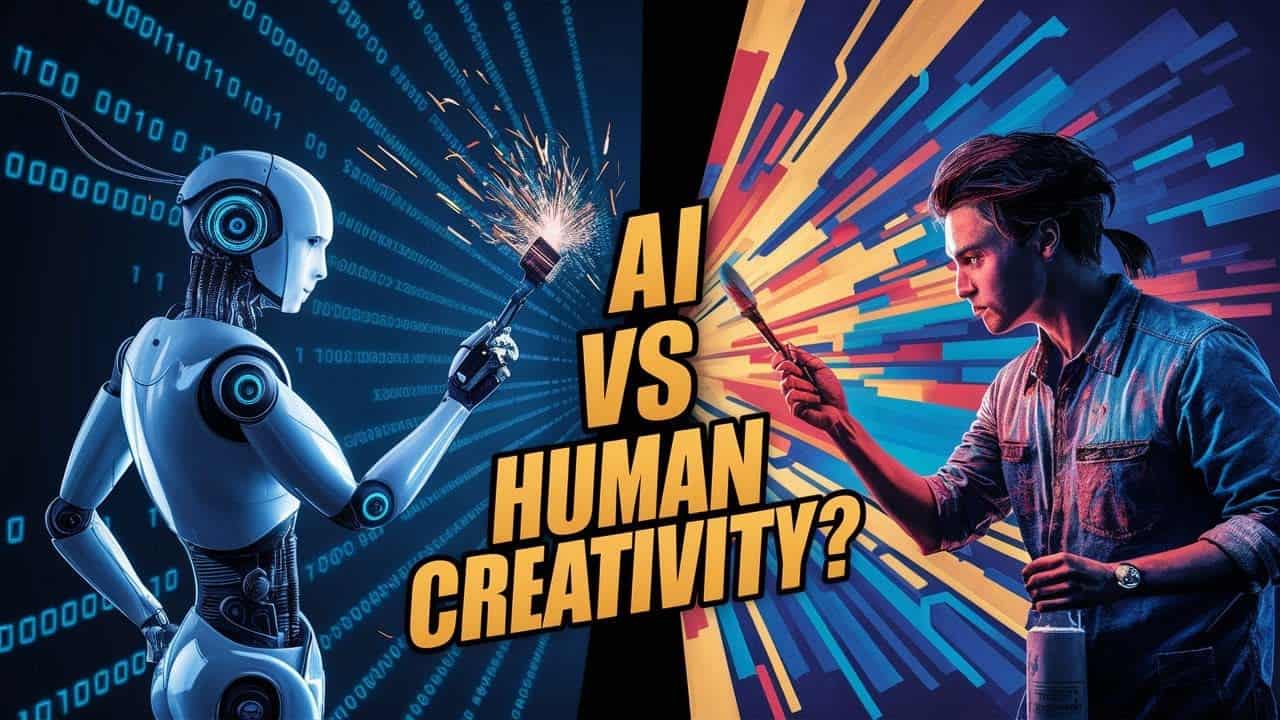
The internet is entering a new phase—one where artificial intelligence is no longer just a tool but an active participant in content creation, decision-making, and cultural production. As generative AI systems become more capable, the question is no longer whether machines can create, but what role human creativity will play in a digital ecosystem increasingly shaped by algorithms.
Rather than signaling the decline of human ingenuity, this shift is redefining what creativity means, how it is expressed, and where its value lies. The future of human creativity in an AI-driven internet will not be about competing with machines, but about collaborating with them, curating their outputs, and redefining originality in a world of abundance.
The Evolution of Creativity in the Digital Age
Historically, creativity has evolved alongside technology. The printing press democratized writing, photography transformed visual storytelling, and the internet enabled global distribution of ideas. Each innovation initially raised concerns about authenticity and the dilution of skill, yet ultimately expanded creative possibilities.
AI represents the next major leap. Tools like generative text models, image generators, and music composition systems can produce high-quality outputs in seconds. This drastically reduces the barrier to entry for creative production, allowing individuals without formal training to produce professional-level content.
However, this democratization also leads to saturation. When millions of users can generate similar outputs using the same tools, differentiation becomes more difficult. Creativity shifts from the act of production to the act of selection, direction, and meaning-making.
From Creation to Curation
In an AI-driven internet, the value of creativity is increasingly tied to curation rather than raw generation. AI can produce thousands of variations of a concept, but it lacks intrinsic taste, context awareness, and cultural nuance. Humans, on the other hand, excel at recognizing what resonates.
This shift positions creators as directors rather than sole producers. Instead of writing every word or designing every element from scratch, they guide AI systems through prompts, refine outputs, and assemble cohesive narratives or experiences.
For example, a content strategist might use AI to generate multiple article drafts, but their expertise lies in selecting the most relevant insights, adapting tone for a specific audience, and aligning the content with broader business objectives. The creative act becomes one of orchestration.
The Rise of Prompt Engineering as a Creative Skill
One of the most significant developments in this new landscape is the emergence of prompt engineering as a core creative skill. The ability to communicate effectively with AI systems—structuring inputs, iterating on outputs, and refining results—becomes a form of digital craftsmanship.
This is particularly relevant in business and marketing contexts, where precision and alignment with brand identity are critical. A well-crafted prompt can yield outputs that are not only accurate but strategically valuable.
In Latin American markets, where businesses are rapidly adopting AI tools but often lack specialized technical teams, prompt engineering represents an accessible entry point for innovation. Professionals who master this skill can significantly enhance productivity while maintaining cultural relevance and linguistic nuance.
Authenticity in an Age of Synthetic Content
As AI-generated content becomes ubiquitous, authenticity emerges as a key differentiator. Audiences are increasingly aware that much of what they consume online may be machine-generated, leading to a growing demand for content that feels genuinely human.
This does not necessarily mean rejecting AI, but rather integrating it in a way that preserves a distinct voice. Personal experiences, unique perspectives, and cultural specificity become more valuable because they are difficult for AI to replicate convincingly.
For creators and businesses, this implies a strategic balance. AI can handle repetitive or data-driven tasks, but human input is essential for storytelling, emotional resonance, and brand identity. The most effective content will likely be hybrid—leveraging AI for efficiency while maintaining a strong human signature.
Economic Implications for Creative Industries
The integration of AI into creative workflows has significant economic implications. On one hand, it increases efficiency and reduces costs, enabling businesses to produce more content with fewer resources. On the other hand, it disrupts traditional roles and revenue models.
Freelancers and agencies that rely on manual content production may face increased competition from AI-assisted alternatives. However, new opportunities are emerging for those who adapt. Services such as AI content optimization, prompt design, and creative direction are becoming increasingly valuable.
In regions like Latin America, this shift could be particularly impactful. The ability to leverage AI tools can enhance competitiveness in global markets, allowing local businesses to scale content production and reach international audiences more effectively. At the same time, it raises questions about job displacement and the need for reskilling.
The Role of Cultural Context
One area where human creativity retains a clear advantage is cultural understanding. AI models are trained on vast datasets, but they often lack deep contextual awareness of specific regions, languages, and social dynamics.
For Spanish-speaking markets, this presents both a challenge and an opportunity. While AI tools are improving in multilingual capabilities, they may still produce content that feels generic or misaligned with local norms.
Human creators who understand regional nuances—such as idiomatic expressions, cultural references, and consumer behavior—play a critical role in adapting AI outputs to resonate with target audiences. This is particularly important in marketing, where cultural misalignment can undermine brand credibility.
Creativity as Problem-Solving
Another important shift is the reframing of creativity as problem-solving rather than pure expression. In an AI-driven environment, the ability to define problems clearly and design effective solutions becomes a key creative competency.
For example, in business contexts, creativity might involve designing an automated customer journey, developing a content strategy that integrates AI tools, or identifying new market opportunities enabled by technology. These tasks require analytical thinking, strategic planning, and an understanding of both human behavior and technological capabilities.
This aligns closely with the needs of modern enterprises, where creativity is not just about aesthetics but about driving results.
Ethical Considerations and Ownership
The rise of AI-generated content also raises important ethical questions. Issues such as intellectual property, data privacy, and algorithmic bias are becoming increasingly relevant.
Who owns content generated by AI? How should creators be compensated when their work is used to train models? How can biases in training data be mitigated to ensure fair and accurate outputs?
These questions do not have simple answers, but they highlight the need for clear frameworks and responsible practices. For businesses operating in international markets, understanding these issues is essential for compliance and reputation management.
The Future: Human-AI Collaboration
Looking ahead, the most likely scenario is not one where AI replaces human creativity, but one where the two are deeply integrated. The internet will become a collaborative space where humans and machines co-create content, products, and experiences.
In this environment, the most successful individuals and organizations will be those that can effectively combine human insight with machine efficiency. This requires not only technical skills but also adaptability, critical thinking, and a willingness to experiment.
For professionals in Latin America and beyond, this represents a significant opportunity. By embracing AI as a partner rather than a threat, they can unlock new levels of productivity and innovation.
A New Definition of Creativity
Ultimately, the future of human creativity in an AI-driven internet is not about preserving traditional notions of authorship, but about redefining them. Creativity becomes less about producing something entirely from scratch and more about shaping, guiding, and contextualizing outputs in meaningful ways.
It is about asking better questions, making better decisions, and creating value in a world where information is abundant but attention is scarce.
In this sense, human creativity is not diminishing—it is evolving. And those who understand this shift will be best positioned to thrive in the digital economy of the future.