

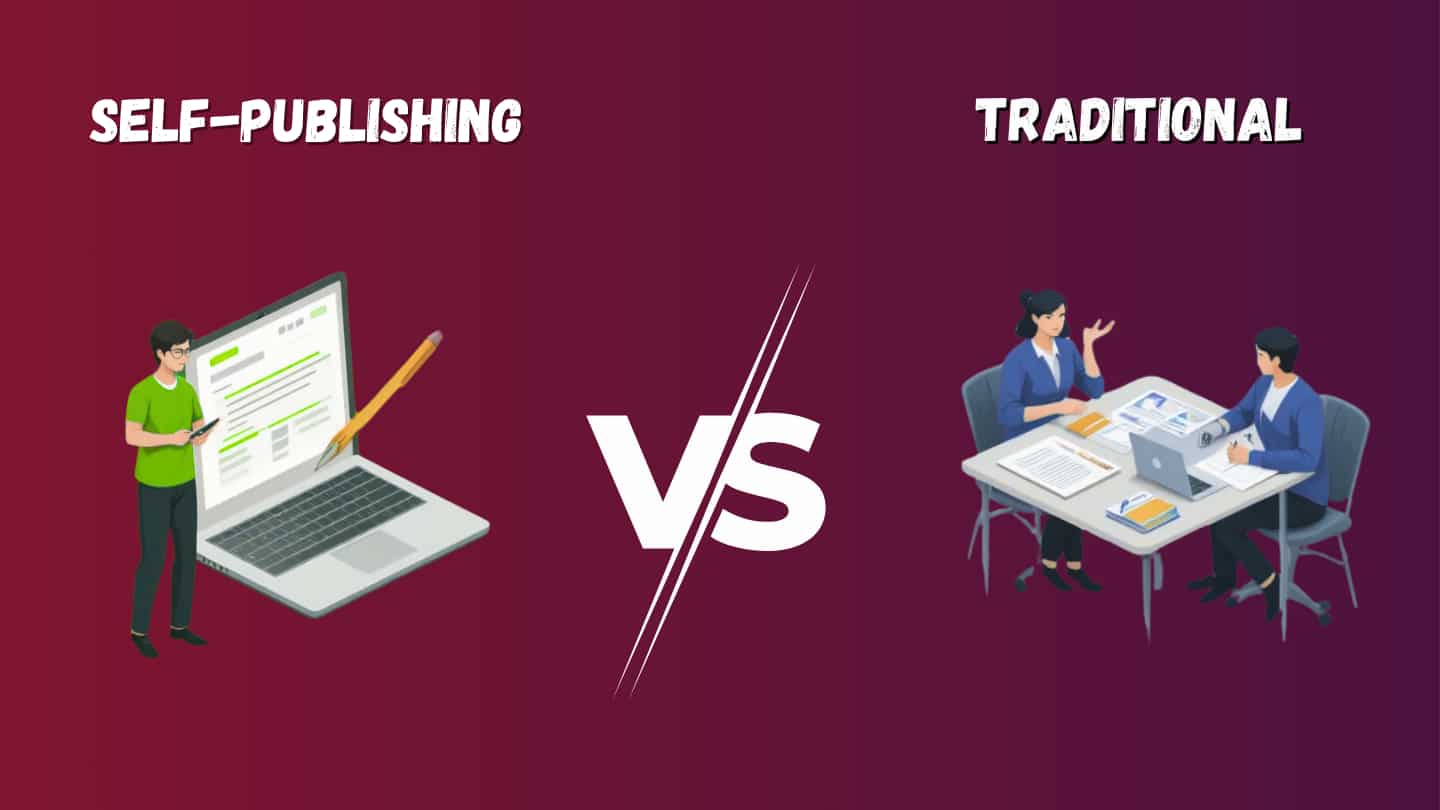
The publishing world has transformed radically in the past decade. What was once an industry controlled by a small circle of editors, agents, and distributors is now an open ecosystem where any writer with an internet connection can reach readers worldwide. Yet one timeless debate remains: Is self‑publishing better than traditional publishing—or vice versa?
In 2026, this question is more complex than ever. Artificial intelligence, digital platforms, shifting reader habits, and new revenue models are reshaping what “being published” really means. The answer depends less on prestige and more on strategy, because each path offers distinct advantages, risks, and opportunities.
This article explores both systems—how they work today, what has changed, and which might be better for different kinds of authors.
1. The Evolution of Publishing Models
A decade ago, the line between self‑publishing and traditional publishing was clear. Traditional authors signed with a publishing house, often via an agent, and received royalties and advance payments. Self‑publishers uploaded their work directly to platforms like Amazon Kindle Direct Publishing (KDP) or Smashwords, keeping control—and risk—for themselves.
By 2026, the landscape looks entirely different.
AI automation, print‑on‑demand technology, and global digital catalogs have blurred the boundaries. Even established traditional publishers encourage hybrid models, while many best‑selling “indie authors” now operate their own mini‑publishers with professional teams.
In other words, the question today is not whether to self‑publish or not—but how much control you want to keep.
2. Traditional Publishing in 2026: Still Relevant?
Traditional publishing retains its aura of prestige. Partnering with a respected house can still elevate a writer’s reputation, especially for literary fiction, academic works, or major nonfiction releases. But it’s not what it used to be.
How traditional publishing works today:
- Writers submit proposals or manuscripts to literary agents.
- If accepted, the agent pitches the work to publishing imprints.
- The publisher handles editing, cover design, marketing, and distribution.
- Authors receive an advance and later royalties, typically between 10–15% of net sales.
What’s changed since 2015:
- Publishers have become more risk‑averse, preferring authors with existing audiences or strong online brands.
- Advances are smaller; many deals now include performance clauses tied to sales data.
- AI and digital analytics inform acquisition decisions, as editors rely on trend predictors.
- Hybrid contracts allow co‑publishing models, where costs and profits are shared.
Traditional publishing remains powerful for visibility, award eligibility, and bookstore distribution. Yet its gatekeeping and slow time‑to‑market frustrate many new voices.
3. Self‑Publishing: The Creative Entrepreneur’s Dream
Self‑publishing has evolved from a desperate alternative to a mainstream business model. Writers can now create, distribute, and promote their work globally without a gatekeeper. Core platforms—Amazon KDP, Apple Books, Kobo, IngramSpark, or Reedsy—have streamlined every step.
How modern self‑publishing works:
- The writer controls every stage—writing, editing, cover design, and pricing.
- The book is distributed as an eBook, audiobook, or print‑on‑demand edition.
- Revenue flows directly from sales platforms to the author, often monthly.
Key advantages today:
- Higher royalties: 60–70% on eBooks and 40–50% on print.
- Creative freedom: You decide cover, title, and content without editorial censorship.
- Speed: From manuscript to launch in days or weeks, not months or years.
- Marketing data access: Detailed analytics on sales and audience demographics.
AI has supercharged this model. Writers use tools for content drafting, professional editing, SEO optimization, translation, and ad targeting—all at a fraction of the cost of human teams. In effect, an independent author in 2026 can run a full publishing company from a laptop.
4. The AI Factor in Modern Publishing
Artificial intelligence has collapsed production bottlenecks across the board. Whether used by Penguin Random House or an indie sci‑fi writer, AI is now part of every publishing workflow.
In traditional publishing:
- AI speeds up editing, layout, rights management, and translation.
- Publishers use predictive algorithms to evaluate manuscripts’ commercial potential.
- Marketing teams rely on AI analytics to shape campaigns and cover design.
In self‑publishing:
- Authors use generative AI to brainstorm ideas, fine‑tune style, and create visual assets.
- AI narration tools produce affordable audiobooks in realistic voices.
- Translation AIs open new global markets without specialists.
- Content intelligence dashboards help authors test titles, keywords, and ads before paying for them.
The result is that self‑publishers are catching up fast. AI has leveled the playing field by reducing costs and increasing reach—two areas once dominated by traditional publishing.
5. Financial Comparison: Royalties, Costs, and Risks
At the core of the debate lies money. Let’s compare the average financial outcomes for each model in 2026.
Traditional publishing:
- Advance payment: US$5,000–$25,000 for debut writers; higher for established names.
- Royalty rate: 10–15% of net receipts (after retailer and distributor cuts).
- Marketing: Mostly provided by publisher, though authors are expected to promote themselves.
- Time to release: 12–24 months on average.
Self‑publishing:
- Up‑front cost: US$200–$2,000 depending on editing and design choices.
- Royalty rate: Up to 70% of sales revenue on digital platforms.
- Marketing: Entirely the author’s responsibility, but AI tools make it manageable.
- Time to release: Weeks or even days.
Financially, self‑publishing often yields higher profit margins, but also carries all the risk. Traditional deals provide stability and brand prestige—but a smaller share of revenue.
For entrepreneurial writers who treat books as products, self‑publishing tends to outperform. For those seeking security or literary credibility, traditional contracts still hold value.
6. Marketing & Distribution: The Real Battleground
Marketing was once the biggest advantage of traditional publishers—they had access to media, bookstores, and PR networks. That gap is closing.
Today’s marketing reality:
- Online visibility (Amazon ranking, TikTok, YouTube, newsletters) has overtaken traditional book tours in importance.
- Readers discover titles through algorithms, influencers, and AI recommendations rather than bookstore displays.
- Self‑published authors can run precision ad campaigns using AI‑driven targeting tools for specific audiences.
For example, an indie thriller author can direct ads to readers who bought similar books that week, while monitoring ROI in real time—something even large publishers struggle to achieve efficiently.
Distribution barriers are also broken. Print‑on‑demand services like IngramSpark and Barnes & Noble Press allow indie books to appear on the same digital shelves as traditionally published ones. In practice, the reader rarely knows or cares which path the author chose.
7. Creative Freedom and Ownership
Control is perhaps the greatest philosophical difference between both models.
Traditional route:
Authors typically surrender many rights—print, digital, audio, international—for years or even decades. Publishers may alter titles, covers, or content to fit market research. Writers may have little say.
Self‑publishing route:
You own everything: copyright, creative direction, and long‑term royalties. You can expand the universe into audiobooks, courses, or games without asking permission.
In 2026, ownership also extends to metadata and brand. A self‑publisher’s data on readers—emails, demographics, behavior—can be monetized far beyond book sales. For many, ownership equals financial freedom.
8. Time and Flexibility
Traditional publishing is slow: multiple review rounds, printing schedules, and distribution logistics delay release. Self‑publishing, conversely, offers agility. Authors can update editions instantly, fix typos, or adapt covers to trends.
In fast‑moving niches such as technology, health, and online entrepreneurship, this flexibility provides a huge edge. Readers expect current information, not content written two years earlier.
Speed may not matter for all genres—literary fiction benefits from patient editing—but for topical writers, self‑publishing clearly wins.
9. Reputation and Validation
Despite all progress, many authors still crave the legitimacy that comes with a traditional deal. Awards, critical recognition, and academic prestige remain dominated by traditional houses.
Being published by a major imprint can open doors to festivals, media interviews, and teaching positions. Conversely, indie success often relies on sales metrics, not literary status.
Yet in 2026, this boundary is narrowing. High‑earning indie authors, especially in romance, fantasy, and self‑help, command massive audiences and even partner with studios for film and TV rights. Success stories such as Sarai Dávila’s AI‑enhanced travel memoirs, which sold 500,000 copies across Latin America, prove that credibility now follows readership more than contracts.
10. The Rise of Hybrid Publishing
A growing middle ground—hybrid publishing—blends both worlds. Authors invest upfront like self‑publishers but receive professional editing, design, and distribution through boutique firms. They keep rights and higher royalties while benefiting from expert support.
Hybrid publishing thrives in 2026 because it solves two problems:
- Traditional publishers’ inflexibility.
- Self‑publishers’ isolation.
Writers with modest resources but high ambition choose hybrid contracts for global reach without losing autonomy.
11. AI Analytics and Market Forecasting
Another 2026 innovation adding nuance to the debate is predictive analytics. Both indie authors and publishers rely on AI dashboards that analyze trends, reader behavior, and potential demand for specific genres or keywords.
- A self‑publisher might test three book titles and cover variations via AI simulation before release.
- A traditional editor might forecast a new memoir’s likely sales trajectory by referencing previous bestsellers with similar sentiment patterns.
This data‑driven approach has democratized success. The mysterious “luck factor” in publishing is shrinking as authors learn to use data to guide creative direction.
12. Long‑Term Career Growth
For career‑minded writers, the choice isn’t binary anymore. Many successful authors alternate or combine both paths.
Typical career hybrid models:
- Start indie, then go traditional: Build audience first, then sign big contracts (common in genre fiction).
- Start traditional, then go indie: Leverage reputation to self‑publish passion projects or higher‑royalty editions.
- Dual strategy: Publish nonfiction traditionally for credibility while self‑publishing fiction for profit.
This fluidity defines the modern era of authorship: writers are entrepreneurs, not just artists.
13. Challenges of Each Path
Of course, no model is perfect.
Self‑Publishing Challenges
- Requires business discipline and marketing knowledge.
- Up‑front editing or design costs can deter beginners.
- Overcrowded markets make discoverability difficult.
- No guarantee of quality control or critical validation.
Traditional Publishing Challenges
- Competitive submission process; most manuscripts are rejected.
- Loss of creative control and lower earnings per book.
- Long production cycles delay income.
- Marketing support often limited to short initial windows.
The ideal path depends on your temperament—whether you value control and agility or stability and prestige.
14. The Reader’s Perspective
From the reader’s standpoint, the distinction between self‑published and traditionally published books is nearly invisible in 2026. E‑book and audiobook formats dominate, and retailers seldom label how a title was produced. What matters most is quality, authenticity, and engagement.
This shift empowers new voices. Readers care less about publishing pedigree and more about storytelling and value. As AI tools help indie authors match professional standards, equality in perception will continue to grow.
15. So—What’s Better Today?
In 2026, there’s no absolute winner—only better fits for specific goals.
- Choose traditional publishing if you seek literary prestige, broad distribution, or don’t want to handle business logistics.
- Choose self‑publishing if you crave independence, faster timelines, creative control, and higher revenue potential.
- Go hybrid if you want both professionalism and ownership with shared costs.
Ultimately, the best path is the one aligning with your vision of success. Some writers define success as artistic validation; others define it as financial independence. Tools now exist for both realities.
The battle of self‑publishing versus traditional publishing has evolved into a choice of empowerment. In previous generations, gatekeepers controlled who could share stories with the world. In 2026, writers define their own trajectory. Technology—especially AI—has erased logistical limits, leaving behind only creative and strategic ones.
Whether you dream of bestseller lists or financial freedom, the modern publishing landscape offers unprecedented options. Writers no longer need to ask for permission to be seen—they simply need the courage to publish on their own terms.
So when someone asks, “Which is better today?” the answer is simple:
Whichever path gives you control of your story—and your future.