

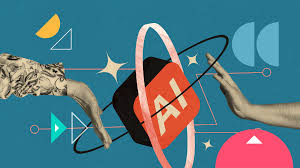
The creator economy stands at a pivotal moment. Artificial intelligence has transformed content creation, enabling anyone to produce articles, images, videos, and music at unprecedented speed and scale. AI tools now handle everything from writing blog posts to generating social media content, editing videos, and designing graphics. This technological revolution has lowered barriers to entry while simultaneously flooding platforms with content. As we navigate 2026, a critical question emerges: Will human talent become more valuable in the AI era, or will it be devalued by automation?
The answer is paradoxical but increasingly clear: Human talent is becoming more valuable—not despite AI, but because of it. The creator economy hasn’t collapsed; it’s restructuring. The value of human creators is shifting from what they can produce to who they are, their authentic voice, their unique perspective, and their genuine connection with audiences.
The Explosion of AI in Content Creation
To understand the future of human talent, we must first grasp the scale of AI’s impact. Research shows that 84% of creators now use AI tools in their workflows. The AI in creator economy market was valued at $3.31 billion in 2024 and is projected to reach $4.35 billion by 2025, growing at a compound annual growth rate of 31.4%.
This explosion has fundamentally changed content economics. Creating a multi-platform content presence that would have required a full content team in 2023 is now achievable by a solo creator using AI tools. The production cost floor has dropped dramatically, and the baseline that audiences expect has risen to match it.
The implications are staggering. A single person can now produce the output of an entire media team. Websites can be populated with thousands of SEO-optimized articles overnight. Social media accounts can post multiple times daily without human intervention. This capability has led to an explosion of content across every platform, from YouTube and TikTok to LinkedIn and Instagram.
The Authenticity Premium: Human Talent’s New Value Proposition
Paradoxically, as AI content becomes ubiquitous, authentic human content has become scarcer and more valuable. This phenomenon, known as the “authenticity premium,” represents the measurable trust and engagement boost that audiences grant to creators perceived as human-led, transparent, and genuine versus those using generic AI content.
The authenticity premium exists as a permanent feature rather than a temporary trend. Audience viewing patterns reveal that people increasingly crave content from real humans who’ve lived through what they’re describing. A travel article written by someone who actually backpacked through Southeast Asia carries more weight than AI-generated travel content. A parenting blog by a parent navigating real challenges resonates more deeply than AI-simulated parenting advice.
Key findings demonstrate this shift:
| Metric | Finding |
|---|---|
| AI tool adoption | 84% of creators use AI tools |
| Market growth | Creator economy projected to exceed $250 billion globally in 2026 |
| Projected market size | Could reach $500 billion by 2030 |
| Professional creators | Approximately 50 million creators are recognized as professional or semi-professional |
| Six-figure earners | More than 2 million earn six-figure incomes annually from content |
The creators winning with AI in 2026 are using it to amplify genuine human content, not replace it. Their content remains as human as ever—the perspective, expertise, and personality are irreplaceable. Their AI tools extend the reach of those human-created pieces to audiences on every platform.
What AI Cannot Replicate: The Human Advantage
Several critical dimensions give human creators advantages that AI cannot replicate:
Authentic Personal Experience and Lived Wisdom
People crave stories from real individuals who’ve lived through what they’re describing. No AI can truly replicate the insights that come from actually living through events, making mistakes, learning lessons, and developing wisdom over time. This authenticity extends to expertise built through practice, not just information synthesis.
A chef’s recipe developed through years of cooking, a musician’s technique refined through decades of practice, a doctor’s diagnostic intuition honed through treating thousands of patients—these cannot be replicated by AI accessing training data.
Genuine Emotional Connection
The most powerful human content often comes from vulnerability—sharing failures, doubts, fears, and struggles. AI can write about these topics, but it cannot genuinely feel them or share authentic vulnerability. Readers can sense when content comes from a place of genuine emotion versus simulated emotion.
Content that makes people feel seen, understood, and less alone often comes from human creators sharing their real struggles. Mental health articles, grief support, relationship advice, and personal development content all benefit tremendously from authentic human experience and emotional depth.
Distinctive Voice and Personality
Every human creator develops a distinctive voice, style, and personality that emerges naturally from their character, background, and values. While AI can mimic styles, it cannot genuinely possess or express authentic personality. This unique voice becomes a creator’s most valuable asset in the AI era.
Creators who have been building Voice DNA profiles since 2024 now have voice models trained on thousands of pieces of content. The accuracy and naturalness of their AI-assisted output has compounded over time. A creator starting in 2026 will reach equivalent accuracy but it takes months of consistent use.
Trust and Credibility
AI creators frequently achieve lower engagement rates compared to content created by humans and struggle to serve as “trusted voices.” Brands often completely shy away from deepfakes, while they tend to use AI creators for more creatively driven projects where it’s evident that the creator is AI-generated.
Brands recognize significant reputational risks associated with collaborating with AI, as evidenced by backlash against AI-generated campaigns from companies like Gucci and Valentino, as well as AI models utilized by Levi’s. Human creators maintain trust that AI cannot manufacture.
The Restructuring of Creator Economics
AI has not replaced creators; it has restructured the economics of the creator economy. Three structural changes have reshaped the landscape between 2024 and 2026:
1. The production cost floor has dropped – Creating professional content now requires far less investment, lowering barriers to entry but increasing competition at the bottom.
2. The authenticity premium has increased – As AI-generated content floods every platform, authentic human voice and perspective become scarcer and more valuable. Creators with genuine expertise, distinctive voices, and real perspectives differentiate more clearly from the rising tide of generic AI content.
3. Distribution has decoupled from production – AI repurposing breaks the proportionality between production effort and distribution reach. A creator can triple their distribution reach without tripling their production effort, fundamentally changing creator business model economics.
This restructuring creates different implications for creators at different stages:
| Creator Stage | Change | Implication |
|---|---|---|
| New creators (0-1K) | AI lowers production barrier | More competition early, faster growth for those with genuine expertise |
| Growing creators (1K-100K) | AI-assisted multi-platform becomes baseline | Creators without multi-platform distribution increasingly invisible |
| Established creators (100K+) | AI amplifies audience advantage | Gap between top creators and field widening, not narrowing |
| Creator businesses | AI enables team-level output from small teams | Leaner creator businesses with higher margins become viable |
The Authenticity Paradox
AI has created what experts call the “authenticity paradox” in the creator economy: The tools that make it easier to produce more content have also made authentic content more valuable. Every creator using generic AI tools produces content that sounds the same. Every creator whose AI tools match their genuine voice differentiates from that sameness.
The paradox: AI is simultaneously the cause of the authenticity problem and the solution to it. Generic AI tools produce the generic content that has flooded platforms. Voice-matched AI tools produce authentic content at scale. The difference is not whether you use AI—it’s which AI and how it handles your voice.
Audiences increasingly know when content is AI-assisted, and increasingly they care—but not uniformly. Audiences object to AI content that replaces authentic perspective, not AI content that amplifies it. A creator who uses AI to repurpose their genuine video content is perceived differently from a creator who uses AI to fabricate opinions they do not hold. The distinction that matters is authenticity of the source, not the presence of AI tools.
Challenges and Concerns for Human Creators
Despite the authenticity premium, human creators face real challenges:
Income Pressure in Some Sectors: UNESCO’s 2026 global report warns that generative AI is projected to drive significant income losses for artists by 2028. Music creators could see revenues fall by 24%, while those in audiovisual sectors may lose 21% of income due to expanding AI-generated content in global markets.
Increased Competition at Entry Level: AI has lowered barriers to entry, flooding platforms with low-quality content. The creator economy is more crowded at the bottom, less differentiated in the middle, and more dominant at the top. Over 165 million new creators joined major social platforms from 2020 to 2025.
Digital Divide: Persistent global inequities compound challenges. While 67% of people in developed countries possess essential digital skills, the figure drops to just 28% in developing countries. This digital divide contributes to widening disparities among creators, particularly those in the Global South.
Income Inequality: Half of all creators earn under $15,000 per year, yet 86% already use generative AI tools in their workflows. The gap between successful creators and those struggling is widening.
The Future: Human Talent Becoming More Valuable
Despite challenges, the evidence suggests human talent is becoming more valuable in specific ways:
Premium Positioning for Authentic Creators
Creators who emphasize their unique voice, experience, and perspective can command premium prices. We’re seeing emergence of premium content markets where human-created content operates as a luxury good. Subscriptions to human-created newsletters, paid courses from human experts, and exclusive human-created content justify higher prices based on authenticity and unique value.
New Career Opportunities
Twenty 2026 creator economy predictions include new content creator careers beginning due to AI displacement, creators licensing their likeness to AI companies, and AI-native virtual creators coexisting with human talent rather than replacing it. The key difference now is that AI has subtly integrated into daily life. Rather than replacing real creators, AI influencers are more likely to coexist with them, albeit in different capacities.
Amplification Rather Than Replacement
The most important thing a creator can do to compete in the AI era is develop and protect their authentic voice. This is the one thing AI cannot manufacture for you. Your specific expertise, distinctive perspective, and genuine opinions are the raw material that AI tools amplify. Without them, AI tools give you production capacity with nothing authentic to produce. With them, AI tools give you reach that matches your genuine value.
Human-Creator Collaboration Models
Creators are increasingly licensing their likeness and voice to AI companies, creating new revenue streams. This suggests human talent is becoming more valuable as a brand asset, not less. The authenticity premium exists because audience viewing patterns and engagement metrics consistently favor human-recognized content over purely AI-generated alternatives.
Strategic Implications for Creators
For human creators navigating this new landscape, several strategies emerge:
Double down on what makes you uniquely human—your experiences, perspective, and authentic voice. This is your competitive advantage that AI cannot replicate.
Use AI to amplify, not replace. The creators winning with AI are using it to extend their genuine human content’s reach, not to fabricate content without authentic perspective.
Build multi-platform presence. Creators who built multi-platform presence in 2024 and 2025 have resilience to algorithm changes; those who did not are exposed to single-platform risk. Cross-platform citation authority is increasingly important as AI search engines cite consistent multi-platform creators.
Be transparent about AI use. Audiences increasingly care about authenticity of source. Being transparent about how you use AI tools builds trust rather than undermining it.
Focus on relationship building. The creator economy is shifting success from skills to insights, emphasizing personal connections, authenticity, and unique paths. Audience depth across platforms creates higher lifetime value and more resilience.
The Premium Future of Human Talent
The creator economy after AI is not a zero-sum game where human talent loses to automation. Instead, we’re witnessing a fundamental restructuring where human talent becomes more valuable precisely because AI exists.
The creator economy isn’t just growing—it’s accelerating past every traditional benchmark. With the global market projected to exceed $310 billion in 2026 and compound annual growth rates above 20%, conditions have never been better for creators ready to build like operators. The market could reach $500 billion by 2030, with over 200 million individuals worldwide classifying themselves as content creators.
The value proposition for human creators has shifted from what they can produce to who they are. AI handles the commodity work—routine content, template-based articles, basic graphics—while human creators focus on what we do best: creating content that’s deeply personal, authentically human, and genuinely valuable because it comes from real people with real experiences.
The authenticity premium is here to stay. As AI content becomes ubiquitous, cheap, and often indistinguishable from mediocre human work, authentic human creativity, experience, and perspective stand out as rare and valuable assets. Human talent isn’t becoming less valuable—it’s becoming more differentiated, more premium, and more essential for creators who can clearly communicate their unique value.
The future belongs to creators who embrace AI as a tool for amplification while doubling down on their humanity. They’re the ones building sustainable careers creating premium content that stands out in an increasingly automated world. While some sectors face income pressure, the overall trajectory suggests that human talent with authentic voice, genuine expertise, and real connection will command premium value in the creator economy after AI.