
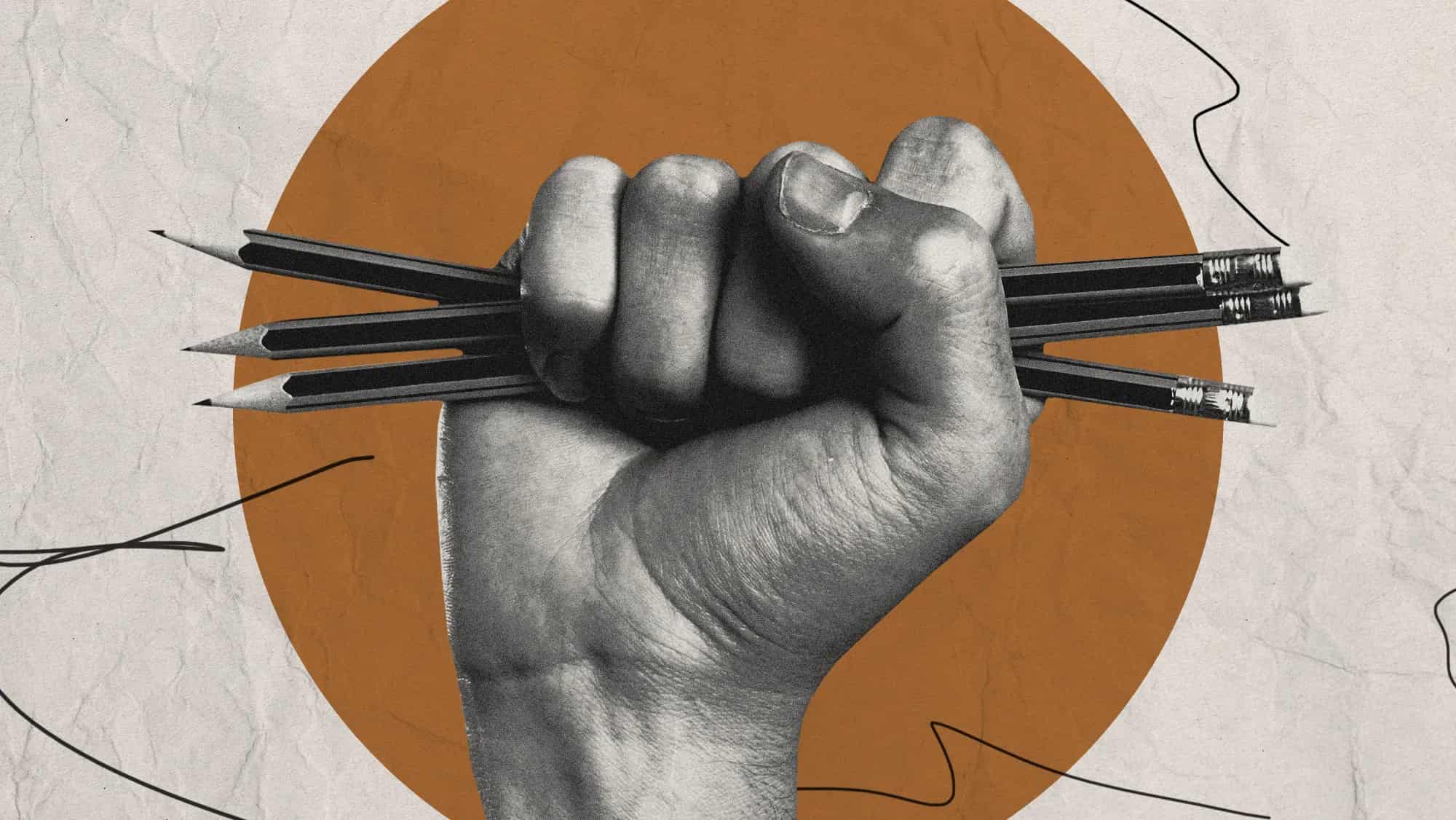
The internet has become awash with AI-generated content. In 2026, scrolling through social media, reading blogs, or browsing art platforms means encountering thousands of machine-created pieces daily. AI images flood Instagram, ChatGPT-written articles dominate search results, and AI-generated music permeates streaming platforms. This saturation has triggered a countermovement: writers and artists worldwide are organizing, litigating, and innovating to protect their livelihoods and creative integrity from what they call “systematic theft on a mass scale”.
The fight against AI saturation isn’t just about technology—it’s about survival. UNESCO’s 2026 global report warns that generative AI is projected to drive significant income losses for artists by 2028, with music creators potentially seeing revenues fall by 24% and audiovisual sector workers losing 21% of income. In response, creators are employing multiple strategies: legal action, collective organizing, technological defenses, certification movements, and building independent platforms.
Legal Battles: The Frontline of the Fight
The most visible form of resistance has been mass litigation against AI companies. Dozens of lawsuits have piled up against the biggest generative AI companies for copyright infringement, involving writers, artists, musicians, comedians, and news organizations.
Authors vs. OpenAI and Microsoft
Prominent authors including John Grisham, George R.R. Martin, Jodi Picoult, Ta-Nehisi Coates, Michael Chabon, and Jonathan Franzen are part of a group suing OpenAI for alleged breach of copyright. In April 2025, twelve copyright lawsuits against OpenAI and Microsoft were consolidated in New York federal court, bringing together cases from authors and major news organizations including The New York Times.
The lawsuit claims OpenAI infringed copyrights by utilizing works to train AI models without permission. In October 2025, a federal judge in New York denied OpenAI’s request to dismiss authors’ claims, marking a significant legal victory for writers. The court determined that OpenAI had relinquished attorney-client privilege by rejecting claims that it knowingly violated copyrights of authors whose works it had unlawfully downloaded.
Comedian Sarah Silverman, along with authors Christopher Golden and Richard Kadrey, filed separate lawsuits against both OpenAI and Meta, alleging copyright infringement. Massachusetts writers Paul Tremblay and Mona Awad were among the first to sue OpenAI in June 2023, claiming ChatGPT mined data from thousands of books without permission.
Visual Artists vs. AI Image Generators
In a potentially landmark case, visual artists Sarah Andersen, Kelly McKernan, and Karla Ortiz led a class action lawsuit against Stability AI, Midjourney, DeviantArt, and Runway AI. In August 2024, U.S. District Judge William Orrick ruled that the artists could pursue their claims, finding they had reasonably argued that the companies violate their rights by illegally storing work and that Stable Diffusion may have been built “to a significant extent on copyrighted works”.
This ruling was described as a “big win for artists’ AI copyright lawsuit” and allowed the case to proceed to discovery. The judge found that Stable Diffusion was “created to facilitate that infringement by design”.
Musicians and Labels vs. AI Music Companies
Sony Music and Universal Music Group are suing AI music creators Suno and Udio for copyright infringement. Over 200 artists including Nicki Minaj, Jonas Brothers, Chuck D, Sam Smith, Katy Perry, and Zayn Malik signed an open letter organized by the Artist Rights Alliance calling on tech companies to “cease the use of artificial intelligence to infringe upon and devalue the rights of human artists”.
The letter warns that “unchecked, AI will set in motion a race to the bottom that will degrade the value of our work and prevent us from being fairly compensated for it”. Artists are insisting that AI companies must get consent before utilizing existing music and be fully transparent about what music they’ve used in training processes.
Open Letters and Collective Statements
In October 2024, an open letter signed by 11,500 actors, musicians, authors, photographers, and composers from across the world condemned the unlicensed use of creative works for training generative AI. The letter was coordinated by British composer Ed Newton-Rex and warned of a “significant, inequitable threat” to creators’ livelihoods.
Notable signatories include Julianne Moore, Kevin Bacon, Thom Yorke (Radiohead), Björn Ulvaeus (ABBA), Sir Kazuo Ishiguro (Nobel Prize-winning novelist), Sir Ian Rankin, Robert Smith (The Cure), and Sean Astin. The statement reads: “The unlicensed use of creative works for training generative AI is a major, unjust threat to the livelihoods of the people behind those works, and must not be permitted”.
The “Human-Made” Certification Movement
As AI content saturation grows, creators are launching certification initiatives to distinguish human-made work, creating what’s called the “authenticity premium”. This movement seeks to establish trust-based labels similar to “Fair Trade” for creativity.
VerifiedHuman
VerifiedHuman™, launched in April 2023 by Micah Voraritskul, has grown into a global community of creators spanning six continents with members in more than 25 countries. The platform certifies human creators who commit to transparent, field-specific standards for their work rather than scanning content with detection algorithms.
In January 2026, VerifiedHuman became a Contributor Member of the Coalition for Content Provenance and Authenticity (C2PA), the industry coalition developing open technical standards for content provenance. The platform operates on a trust-based “Fair Trade for creativity” model, offering free membership with a “pay what you can” structure.
VerifiedHuman uses a five-level Human-AI Collaborative Spectrum (VH1–VH5) that provides a framework for how creators use AI in their process, with certification requiring creators to lead the creative work—not simply edit machine output.
Multiple Competing Initiatives
At least a dozen competing initiatives have emerged, including:
| Initiative | Focus | Verification Method |
|---|---|---|
| Proudly Human | Text, art, video, music | Strict audits at every stage |
| Not by AI | Websites, books, podcasts, films | Self-certify 90% human-created |
| Authors Guild “Human Authored” | Books and written works | Rigorous proof required |
| Proof I Did It | All creative work | Blockchain certificates |
| Human Made Mark | AI-free creative work | Self-certified, voluntary |
| no-ai-icon.com | General content | Free download, little scrutiny |
UK publisher Faber and Faber now adds a “Human Written” stamp to some books, while Australia-based Proudly Human carries out strict audits requiring time-lapse videos, sketches, drafts, and raw files—turning certification into a digital workflow audit.
Industry Adoption
The movement finds its main expression through film and publishing activities. Filmmakers are beginning to adopt comparable labels for festival submissions and press materials, with studios self-attesting AI-free status in press notes. The Authors Guild launched the “Human Authored” initiative in early 2026 specifically for books and written work.
By 2026, labels are appearing on books, films, marketing campaigns, and even physical products, reflecting a deeper cultural backlash as people crave authenticity in an era where everything can be faked.
Technical Defense Strategies
Creators are developing technical tools and protocols to protect their work from unauthorized AI training:
Opt-Out Mechanisms
In 2026, many companies provide opt-out mechanisms, and creators are using technical tools to block AI crawlers:
Updating robots.txt files to block known AI crawlers including:
- GPTBot (OpenAI)
- FacebookBot / Meta
- Googlebot-ai
- Other identified AI scrapers
Adding meta tags for page-level control:
<meta name="robots" content="noai, noimageai">Platform-specific opt-outs in 2026:
- OpenAI: Settings → Data Controls → Turn off “Improve the model for everyone”
- Meta/Facebook/Instagram: Privacy Center → AI at Meta → Submit objection request
- LinkedIn: Settings → Data Privacy → Toggle off “Use my data for training content creation AI models”
- X (Twitter): Check Grok & Third-party Collaborators settings
Watermarking and Provenance
Creators are using watermarking for images and adding clear copyright notices, though these are not foolproof against scraping. The C2PA content credentials standard, backed by big tech like Meta, Adobe, and Microsoft, was designed to authenticate media but has struggled with adoption, partly because many creators and platforms still have incentives to hide AI use.
Collective Organizing and Union Action
Creatives are joining unions and professional organizations to negotiate collectively:
SAG-AFTRA, the Graphic Artists Guild, and various actor associations are negotiating contracts, pushing legislation, and defending members against AI threats. In February 2026, the Graphic Artists Guild launched their “No Artists, No Art” campaign in response to AI companies continuing to use artists’ work without consent.
The UK government made a major policy U-turn in 2026, scrapping plans to give AI firms a “free pass” to use the work of authors, musicians, and filmmakers without consent after listening to the creative sector. However, artists warn this is a “hollow victory” since their work may already be inside AI training datasets.
Building Independent Platforms and Exit Strategies
Some creators are building independent platforms or exiting social media entirely to avoid AI saturation:
Newsletter platforms represent a structural defense. A newsletter operates as a business where the subscriber list belongs to the creator, with no algorithm suppression and no platform demonetization. The trust relationship between a human writer and subscribers cannot be replicated by autonomous agents.
Social startups have sprung up that explicitly reject AI, such as a revamped version of Vine called diVine. YouTube has cracked down on AI channels deemed “spam,” while creators are increasingly building their own media brands, IP, and agencies rather than relying solely on platform deals.
The market is splitting: some creators remain focused on in-feed brand deals, while others are building broader businesses that extend beyond social platforms, with more creator-owned agencies emerging.
Challenges and Criticisms
The resistance movement faces significant challenges:
The Digital Wild West: Artists warn of a “digital Wild West” where it’s not clear whether their material has already been used by AI firms, since most training data was scraped before opt-out mechanisms existed.
Exhausting Certification Requirements: While some creators welcome the extra step of certification as a way to stand out, others call it “exhausting and invasive” to submit time-lapse videos, sketches, drafts, and raw files.
Blockchain Solutions Cost More: Blockchain solutions and human auditors offer more credibility but come with higher costs and slower processes.
Income Decline Continues: Despite legal victories and certification movements, UNESCO reports that creators worldwide are facing mounting financial pressures as AI continues to transform cultural and creative industries.
The Opt-Out Problem: The opt-out model reduces a platform’s relationship with the creative ecosystem. When creators believe their work is used without a real choice, trust erodes. Many experts argue for opt-in frameworks where creators must consent before their work is used for AI training.
The Future of Creative Resistance
The fight against AI saturation is far from over. Key developments to watch include:
Continued Legal Precedents: The consolidated lawsuits against OpenAI and Microsoft are moving through discovery, with outcomes that could establish crucial precedents for copyright law in the AI era.
Legislative Action: The UK’s policy U-turn suggests governments may be responding to creative sector pressure, potentially leading to more protective legislation globally.
Licensing Ecosystems: Publishers like Bloomsbury are working on licensing ecosystems where rights holders opt in to AI-related licensing, helping shape and benefit from the nascent licensing environment while upholding copyright.
Technical Standards: VerifiedHuman’s entry into C2PA suggests growing alignment between certification initiatives and global content authenticity standards.
Market Differentiation: As the “authenticity premium” becomes measurable, human-made content may command premium pricing, creating economic incentives for certification.
The resistance movement demonstrates that creators are not passively accepting AI saturation. They’re fighting back through every available channel: courts, certification, technology, collective organizing, and platform building. While the outcome remains uncertain, this multi-pronged approach suggests the creative community will continue to push back against unlicensed AI training and content saturation for the foreseeable future.
The question isn’t whether AI will transform creative industries—it already has. The question is whether the resistance movements can establish frameworks that protect creators’ livelihoods, ensure fair compensation, and maintain the value of human creativity in an increasingly automated world.