
Publishing a book involves more than writing a manuscript and designing a cover. If you want to sell printed copies, distribute your work through bookstores, or build an independent publishing brand, you may also need an ISBN.
Fortunately, getting an ISBN is usually straightforward once you know which agency to contact and whether a free number will meet your publishing goals.
In this guide, you will learn what an ISBN does, how to get one, how ISBN costs work, and when it makes sense to own your own ISBN rather than use a free option.
What Is an ISBN?
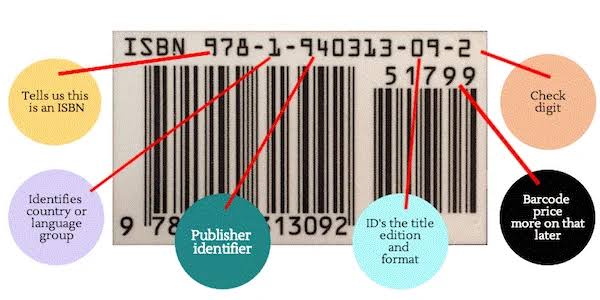
An ISBN, or International Standard Book Number, is a unique identifier used to distinguish a particular book publication. Modern ISBNs contain 13 digits and are used by booksellers, libraries, distributors, and publishers to identify books in their systems.
Think of an ISBN as a product identifier for a specific book edition and format. It helps the book trade distinguish one publication from another, especially when different versions have similar titles or cover designs.
What an ISBN helps with
- Identifying a book edition and format
- Bookstore and distributor cataloging
- Library and wholesale ordering
- Managing publication metadata
What an ISBN does not do
- Automatically copyright your book
- Guarantee sales or bookstore placement
- Replace your publishing agreement
- Guarantee protection against plagiarism
An ISBN is not the same as a copyright registration, a barcode, or an Amazon ASIN. A barcode is a scannable representation of a number, while an ASIN is Amazon’s own catalog identifier. Copyright and ISBN systems serve different purposes.
Do You Really Need an ISBN?
The answer depends on your book format, publishing platform, and distribution plans. You should decide this before finalizing your book’s publishing setup.
| Book type or goal | Is an ISBN needed? | What to consider |
|---|---|---|
| Kindle ebook on Amazon KDP | Generally no | KDP uses an Amazon ASIN for Kindle ebooks. |
| Paperback on Amazon KDP | Usually yes | KDP offers a free ISBN for eligible print books or lets you supply your own. |
| Hardcover on Amazon KDP | Usually yes | Eligible titles can use a free KDP ISBN or an ISBN you own. |
| Print book sold through multiple services | Usually yes | Your own ISBN may make it easier to use the same edition across eligible distributors. |
| Personal PDF shared privately | Usually no | A private digital document generally does not need a retail ISBN. |
| Low-content book, such as a notebook | It depends | Platform rules differ; some low-content books may be published without an ISBN. |
Requirements vary by platform and country. Always check the current rules of the publishing service you plan to use. For Amazon’s specific requirements, read the official KDP ISBN and imprint guide.
Free ISBN vs. Buying Your Own ISBN
For many first-time self-publishers, the main decision is whether to accept a free ISBN from a publishing platform or buy one through the official ISBN agency in their country.
Use a free ISBN
Best for: Authors who want a simple, low-cost way to publish eligible print books through one platform.
- No direct ISBN purchase cost
- Less administration during setup
- May restrict where that ISBN can be used
- The platform may appear as the publisher or imprint
Buy your own ISBN
Best for: Authors building a publishing business or planning broader print distribution.
- More control over the publisher imprint
- Can be used across eligible services for the same edition
- Requires registration and accurate metadata
- Costs vary by country and ISBN agency
For example, Amazon KDP’s free ISBN can only be used to publish that print book through KDP. If you purchase your own ISBN, you can use it on KDP and other compatible services, provided you follow each service’s requirements and keep the book’s registered details consistent.
How to Get an ISBN for Your Book: Step-by-Step
Step 1: Decide where and how you will publish
Before applying, decide whether your book will be a paperback, hardcover, ebook, or several formats. Also consider whether you plan to sell exclusively through one platform or distribute your print book through multiple retailers and wholesalers.
Your distribution plan determines whether a free platform ISBN is sufficient or whether purchasing your own ISBN is worth the cost.
Step 2: Find the official ISBN agency for your country
ISBNs are generally allocated through the national ISBN agency responsible for the country where the publisher operates. The International ISBN Agency provides a directory to help you find the appropriate organization.
Start here: Find your official ISBN agency.
Do not assume that an ISBN agency in another country is the right one for you. Follow the official agency’s eligibility rules and application process.
Step 3: Check the application requirements and price
The application process and cost depend on your country. Some agencies provide ISBNs free of charge to eligible publishers, while others charge fees or offer packages. The International ISBN Agency does not set a universal retail price for ISBNs.
Check whether you need to provide identification, publisher details, an imprint name, publication information, or business documentation. If you intend to publish several books, ask whether a single ISBN or a block of ISBNs is more appropriate.
Step 4: Choose your publisher or imprint name
An imprint is the publisher name associated with your book. If you are self-publishing, this may be your own name or a publishing brand you operate, depending on the agency’s rules.
Choose the name carefully and enter it consistently. If you register an ISBN under an imprint, use the same spelling and details when entering the book into a publishing platform.
Step 5: Submit the application and receive your ISBN
Complete the official agency’s application and follow its instructions for assignment. Processing times vary. Do not rely on a third-party website’s promised turnaround unless you have verified that it is authorized and suitable for your situation.
Once the ISBN has been assigned, store the number and its associated publication details somewhere secure.
Step 6: Register accurate book metadata
Depending on the agency and platform, you may need to provide details such as:
- Book title and subtitle
- Author or contributor names
- Publisher or imprint
- Publication format and edition
- Publication date and other cataloging details
Make sure your publishing platform’s details match the ISBN registration. Inconsistent information can delay approval or create cataloging problems.
Step 7: Add the ISBN to your print book setup
If you are publishing a print book, enter the ISBN in your platform’s book setup. Follow its guidance on whether the ISBN should appear in your interior file and how to prepare the cover barcode.
Do not invent a number or use an ISBN assigned to a different book. If the platform generates a barcode, verify that it corresponds to the correct ISBN.
How to Get a Free ISBN on Amazon KDP
If you are publishing an eligible paperback or hardcover through Amazon Kindle Direct Publishing, you may be able to request a free ISBN during the setup process.
- Sign in to your Amazon KDP account.
- Open your Bookshelf and create or edit the relevant paperback or hardcover title.
- Go to the print book’s content settings and find the ISBN section.
- Select the option to get a free KDP ISBN, if your title is eligible.
- Assign the ISBN and continue setting up your manuscript, cover, pricing, and distribution.
KDP’s free ISBN is convenient, but it comes with a key limitation: it is for use with KDP, and the associated imprint is listed as “Independently published.” If you want to use your own publisher imprint or publish the same print edition through other services, consider obtaining your own ISBN instead.
For Kindle ebooks published through KDP, an ISBN is not required. Amazon assigns an ASIN to the ebook listing.
Review the official instructions before publishing: How to get an ISBN on KDP.
How Much Does an ISBN Cost?
There is no single worldwide price for an ISBN. Your cost depends on the country, the national agency’s policies, and whether you need one ISBN or several.
| Option | Potential cost | What to know |
|---|---|---|
| Eligible free platform ISBN | $0 for the ISBN | May come with platform or imprint restrictions. |
| ISBN from a national agency | Country-dependent | Some agencies provide ISBNs free; others charge fees. |
| Multiple ISBNs or a publisher block | Country- and agency-dependent | May be useful if you plan to release several formats or titles. |
| Cover barcode service | Provider-dependent | Barcode pricing is separate from ISBN allocation; some services include it. |
Be careful when buying ISBNs from resellers. Check that the number is legitimately assigned to you or your publishing imprint and that the publisher information can be registered correctly. Buying a low-cost ISBN from an unknown source may create problems with ownership, metadata, or distribution.
Which ISBN Option Is Right for You?
Use this quick decision tool to get a starting recommendation based on your publishing plans. It is a general guide, not a substitute for your publishing platform’s current rules or your country’s ISBN agency requirements.
ISBN Decision Tool
Your recommendation
Common ISBN Mistakes to Avoid
1. Reusing the same ISBN for different formats
A paperback and hardcover edition generally require separate ISBNs. Make sure every format has the correct identifier before publishing.
2. Assuming an ISBN protects your copyright
An ISBN identifies a publication; it does not establish or replace copyright protection. Copyright rules depend on the applicable jurisdiction and the nature of the work.
3. Entering a different imprint name on the publishing platform
If you supply your own ISBN, the title, author, publisher, and other registered details must match the relevant records. Copy the information directly from your agency records when possible.
4. Buying an ISBN before deciding on your distribution plan
If you only plan to publish an eligible print title through KDP, a free ISBN may be sufficient. If you intend to distribute widely, check the rules of all intended services before deciding.
5. Thinking every ebook requires an ISBN
Many ebook platforms do not require authors to provide an ISBN. Requirements differ among retailers and digital distribution services, so verify the rules for each service you use.
6. Forgetting that a new edition may need a new ISBN
Major changes to a publication can require a new ISBN, while minor corrections may not. Consult the ISBN agency or distributor if you are releasing a revised edition.
Frequently Asked Questions About ISBNs
Can I publish a book without an ISBN?
Yes, in some cases. Kindle ebooks on Amazon KDP do not require an ISBN, and some low-content print books can be published without one. Most standard print books intended for conventional book distribution need an ISBN.
Is a free ISBN as good as a paid ISBN?
Both can identify an eligible publication. The important difference is control and permitted use. A free platform ISBN may be restricted to that platform and may use its assigned imprint, while your own ISBN can offer more flexibility across eligible services.
Can I use the same ISBN on Amazon and another retailer?
If you own the ISBN, you can generally use it for the same edition and format across compatible publishing services, subject to their rules. A free KDP ISBN is restricted to KDP and should not be reused on another service.
Does every book format need its own ISBN?
Different print formats, such as paperback and hardcover, generally require different ISBNs. Ebook requirements vary by platform and distribution model, and many ebook services do not require one.
Can I buy an ISBN in another country?
In general, publishers should apply to the national ISBN agency responsible for the country where they operate. The International ISBN Agency provides guidance for special cases and countries without a directly available agency.
Does an ISBN automatically register my copyright?
No. ISBN assignment and copyright are separate matters. An ISBN identifies a publication; copyright protection and registration follow the rules that apply in your jurisdiction.
Should I buy several ISBNs at once?
That may be practical if you expect to publish multiple titles or formats, but the value depends on the price and package options in your country. Compare your agency’s current fees before buying a block.
Where can I find the official ISBN agency for my country?
Use the International ISBN Agency’s directory to identify the appropriate agency and follow its application guidance.
Final Thoughts: Is Getting an ISBN Worth It?
If you are publishing your first Kindle ebook and selling it through Amazon KDP, you can usually skip the ISBN. If you are releasing a paperback or hardcover, you will generally need one unless your book qualifies for a platform-specific exception.
A free ISBN is often a practical choice for authors who want a simple start on one platform. Buying your own ISBN may be worthwhile if you want to use your own imprint, maintain more control over publisher metadata, or distribute the same print edition through multiple services.
The best next step is to confirm your book format, decide where you want to sell it, and check the official ISBN agency for your country before paying for anything.
Official Resources
- International ISBN Agency: Find an ISBN agency
- International ISBN Agency: How to get an ISBN
- Amazon KDP: Get an ISBN
- Amazon KDP: What is an ISBN and imprint?
Publishing requirements, agency fees, and platform policies can change. Confirm the latest details with the official agency and service you intend to use.