

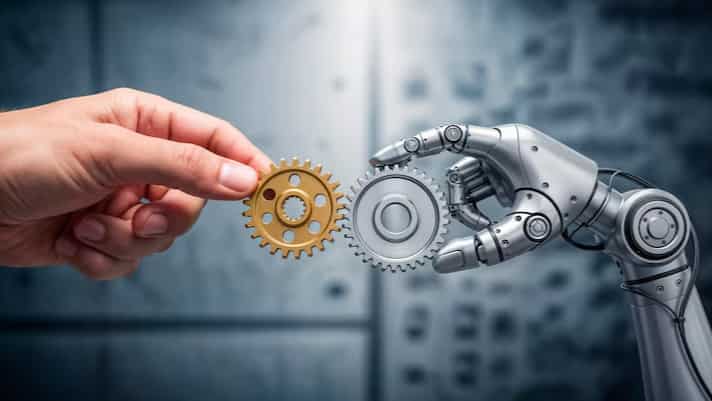
Technology has never been more capable of generating content, yet users have never been more desperate for human connection. In 2026, a powerful counter-movement has emerged across the digital landscape: authenticity over automation. After two years of AI-generated everything flooding social media feeds, websites, and inboxes, consumers are actively rejecting polished, algorithmic content in favor of raw, imperfect, human-made material.
This isn’t a niche preference—it’s a fundamental shift in internet culture. Instagram CEO Adam Mosseri announced that 2026 will favor raw, real human content as AI floods feeds, making overly polished posts less appealing and harder to trust. TikTok’s official 2026 Trend Report predicts a massive move away from passive scrolling toward deeper human connection, authenticity, and clarity, with their first trend pillar called “Reali-TEA” (authenticity over aesthetics). The authenticity premium is no longer theoretical—it’s measurable, actionable, and reshaping how brands, creators, and platforms operate.
The Scale of AI Saturation
To understand why authenticity has become the new premium, we need to grasp the sheer scale of AI content saturation. The 90% AI content prediction that circulated widely has turned out to be an exaggeration, but the reality remains staggering: roughly 50-74% of new content created online is now AI-generated.
Stanford’s AI Index Report 2026 reveals that since early 2025, more than half of all new content published on the internet is generated by AI—51.72% AI versus 48.28% human-written. An Ahrefs analysis of 900,000 newly created web pages found that 74% contained AI-generated content. Research from Graphite showed that by May 2025, AI-generated articles peaked at 52% of newly published content, rapidly climbing from roughly 10% in late 2022 to over 40% by 2024.
The implications are profound. About 90% of digital media on the internet will be influenced by AI in some way. This flood includes everything from blog posts and product descriptions to social media updates and news articles. The result is what many call “AI slop”—mass-produced, generic content that’s technically competent but lacks soul, perspective, or genuine human experience.
The Authenticity Premium: What the Data Shows
The “authenticity premium” refers to the measurable trust and engagement boost that audiences grant to creators and brands perceived as human-led, transparent, and genuine versus those using generic AI content. The data overwhelmingly supports this trend:
| Finding | Source |
|---|---|
| Number one thing consumers want from brands is human-generated content | Sprout Social 2026 Report |
| Consumers say brands should make human-generated content their #1 priority | Sprout Social surveyed 2,300+ consumers |
| Millennial and Gen Z users are 1.5x more likely to engage with brands that build genuine community | TikTok 2026 Report |
| 84% of creators use AI tools, but winners use AI to amplify human content, not replace it | Rolling Stone 2026 |
| AI content farms seeing 86% of articles in Google Search are written by humans, only 14% AI | Graphite report |
The authenticity premium exists as a permanent feature rather than a temporary trend. Audience viewing patterns and engagement metrics consistently favor human-recognized content over purely AI-generated alternatives.
Why Authenticity Is Winning
Several factors explain why the pendulum is swinging back toward human content:
AI Content Is Becoming Indistinguishable—and Boring
Current AI models produce text that often reads as human without careful inspection, making reliable detection increasingly difficult. But this competence has backfired. When everything sounds the same, nothing stands out. “Generic AI tools produce generic content that has flooded platforms”. Every creator using the same AI tools produces content that sounds remarkably similar, creating a sea of sameness that audiences find exhausting.
Perfect Content Has Lost Its Appeal
Instagram CEO Adam Mosseri predicted that as AI output becomes ubiquitous, “too-perfect” content—heavily edited or algorithmically smoothed images—will lose its appeal because AI can now produce similar polished visuals within seconds. Instead, attention is shifting toward content that looks raw, real, and imperfect: backlighting, shaky hands, small flaws, and human traces that make an image feel less manufactured.
Those imperfect details are likely to become a defining current of 2026 precisely because they prove something AI cannot replicate: real human presence.
Trust Is in Short Supply
In a world where AI can create anything, authenticity is no longer something brands should aim for—it’s the baseline expectation. People can spot AI-written posts instantly, and they’re increasingly skeptical of content that feels manufactured.
The flood of AI-generated material has made it harder for users to distinguish what is real from what is fake, creating rising pressure on platforms to detect and label AI-generated content. This skepticism extends to advertising, influencer content, news, and even personal social media posts.
Human Connection Is the Scarce Resource
The most valuable thing on the internet in 2026 isn’t information or even entertainment—it’s genuine human connection. TikTok’s trend report emphasizes that audiences seek “curiosity and emotional resonance” over passive consumption. The platform is predicting a move toward deeper human connection, authenticity, and clarity rather than polished, aesthetic content.
How the Trend Is Manifesting Across Platforms
Instagram: Embracing the Imperfect
Instagram’s algorithm changes in 2026 explicitly favor authentic content Adam Mosseri suggested that rapidly advancing AI technology in 2025 has flooded the internet with synthetic material, pushing 2026’s trend toward content that feels more authentic and grounded in reality. The platform is likely to become the year people crave content that feels more real, after AI-generated material increasingly dominated feeds throughout 2025.
Photographers and creators report that AI content has been taking over social media feeds in large volumes, creating major impacts for their work. Mosseri argued that AI has already reached a point where it can produce highly realistic images, making reliable detection and identity verification increasingly difficult.
TikTok: Reali-TEA as Core Philosophy
TikTok’s 2026 Trend Report identifies three major trends, with “Reali-TEA” leading the pack: Fantasy is fading. In 2026, audiences will realign through the chaos to forge new realities together. The move from polished content to “messy truth” underscores a broader trend in consumer behavior: authenticity drives engagement, not perfection.
TikTok’s three pillars for 2026 are:
- “Reali-TEA” (authenticity over aesthetics)
- “Curiosity Detours” (niche over broad)
- “Emotional ROI” (clarity over hype)
The report emphasizes a shift towards active creation and genuine connections as audiences seek curiosity and emotional resonance.
Brands: Pivoting to Human-First Marketing
In 2025, a new marketing current surfaced: authenticity over automation. Brands like Heineken, Aerie, Polaroid, and Cadbury have rolled out campaigns explicitly centered on human authenticity.
According to Sprout Social’s 2026 Global Social Media Report, the number one thing people want from brands right now is human-generated content. Marketing teams are being told to use AI to power audience insights and process efficiency, not replace human taste.
The shift represents a fundamental change in marketing philosophy. Instead of using AI to produce more content faster, successful brands are using AI to understand audiences better while keeping humans at the creative center.
The Creator Economy Response
Creators are adapting to this trend in several ways:
Transparency About AI Use
The distinction that matters is authenticity of the source, not the presence of AI tools. A creator who uses AI to repurpose their genuine video content is perceived differently from a creator who uses AI to fabricate opinions they do not hold. Creators are increasingly being transparent about how they use AI tools, which builds trust rather than undermining it.
Emphasizing Behind-the-Scenes Content
Showing the real behind-the-scenes, the creative process, failures, and struggles has become more valuable than polished final products. Audiences reward authenticity over automation by engaging more deeply with content that shows the human effort behind it.
Building Direct Relationships
Creators are prioritizing newsletter subscriptions, direct messaging, and community building over algorithmic reach. A newsletter operates as a business where the subscriber list belongs to the creator, with no algorithm suppression and no platform demonetization. The trust relationship between a human writer and subscribers cannot be replicated by autonomous agents.
What This Means for Businesses and Marketers
The authenticity over automation trend has several strategic implications:
Make Human Creation the Priority
Consumers say brands should make human-generated content their #1 priority in 2026. This doesn’t mean abandoning AI entirely—use it to power audience insights and process efficiency, not replace human taste.
Embrace Imperfection
TikTok’s prediction that authenticity drives engagement, not perfection, means brands should stop chasing highly polished, aesthetic. Show the real, show the flaws, show the human behind the brand.
Build Community, Not Just Content
Millennial and Gen Z users are 1.5x more likely than older audiences to engage with brands that build genuine community. Nurture relationships instead of pitching, because today’s audiences reward authenticity over automation.
Understand Platform Nuances
How users want brands to show up on social varies by network. Brands that tailor their presence to platform-specific behaviors get more from their strategy. What works on TikTok won’t work the same way on LinkedIn or Instagram.
Challenges and Tensions
Despite the clear trend toward authenticity, several challenges remain:
The Cost Problem: Creating authentic human content is more time-consuming and expensive than generating AI content at scale. This creates tension between budget constraints and audience expectations.
The Definition Problem: What counts as “authentic”? Many creators already use AI tools for research, editing, and brainstorming. How much AI assistance is too much before content loses its “human” status?
The Scaling Problem: Authenticity is inherently difficult to scale. The more you try to manufacture authenticity, the less authentic it becomes.
The Measurement Problem: While engagement metrics clearly favor authentic content, it’s harder to measure long-term brand trust and loyalty compared to short-term metrics like clicks and views.
The Future of Authenticity Online
The authenticity over automation trend isn’t going away. As AI content becomes even more ubiquitous in 2026 and beyond, the value of genuine human content will continue to increase. We’re likely to see:
More certification and labeling of human-made content, similar to “Fair Trade” for creativity
Platform algorithm changes that explicitly favor human-verified content
Premium pricing for human-created content across journalism, education, entertainment, and marketing
New consumer expectations that default to skepticism about AI content unless proven otherwise
The internet is experiencing a cultural correction. After years of optimizing for efficiency, scale, and algorithmic perfection, we’re rediscovering that the most valuable things online are inherently human: authentic voice, genuine perspective, real experience, and meaningful connection.
As Instagram’s Adam Mosseri put it, too-perfect content is losing its appeal precisely because AI can now produce similar polished visuals within seconds. The real flex in 2026 isn’t perfect lighting or flawless execution—it’s authenticity.
For creators, brands, and platforms, the choice is clear: double down on what makes you human, or risk becoming invisible in a sea of AI-generated sameness. The authenticity premium is here to stay, and it’s creating a new internet where real human connection is the ultimate competitive advantage.